

You Can't Bloom While Punishing Yourself for Being Dormant

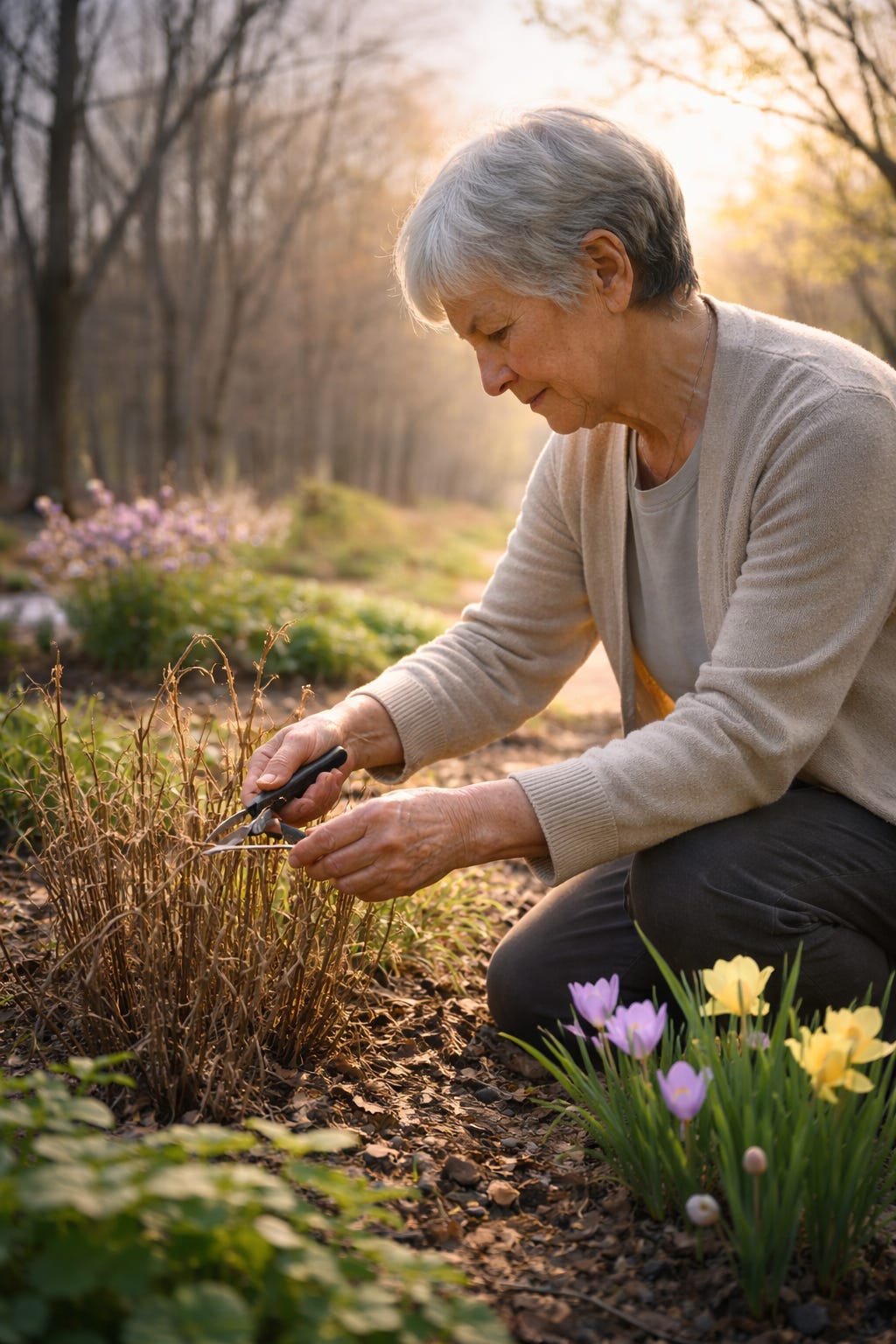
Last week, we talked about courage - about spring making brave things possible, about choosing to show up even when you’re scared. But you can’t fully step into spring’s vitality while dragging winter’s guilt behind you.
Before you can embrace new growth, you need to forgive yourself for the months you spent just surviving.
I have a confession to make about this past January and February.
There were moments when I barely left my house. I canceled plans I’d been looking forward to. I ate cereal for dinner more times than I care to admit. I watched far too much television. Some days my step count was embarrassing. My vegetable intake was minimal. My social life was nearly nonexistent.
And I felt guilty about it.
I’d look at my neglected treadmill and think “I should be exercising.” I’d see the unanswered texts and think “I should be more social.” I’d notice my sluggish energy and think “what’s wrong with me?”
The guilt made everything worse. Not only was I low-energy and withdrawn, I was also beating myself up about it.
Then March arrived. The days are a bit sunnier and I'm starting to see some green leaves in the garden. And suddenly I have energy again, motivation again, interest in things again
Which made me realize: I wasn’t lazy in winter. I was conserving. My body was doing exactly what it needed to do.
The guilt was the only unnecessary part.
Why We Punish Ourselves for Winter
There’s this pervasive message in our culture that you should be productive, energetic, and positive all the time. That if you’re not, something is wrong with you.
This message is particularly loud for seniors. You’re supposed to be “aging well” and “staying active” and “maintaining your independence.” The pressure to prove you’re not declining is enormous.
So when winter hits and your energy drops and your motivation disappears and all you want to do is stay home and rest, you interpret it as personal failure.
You think: I’m getting old. I’m giving up. I’m letting myself go.
But what if none of that is true? What if you were just doing winter?
The Biology of Winter Survival Mode
Here’s what actually happens to your body during winter months, especially as you age:
Vitamin D production drops dramatically with less sunlight exposure, affecting everything from bone health to mood regulation. Serotonin levels decline, which directly impacts motivation, energy, and sense of well-being. Your circadian rhythm shifts, making you naturally more tired earlier and groggier in the morning.
Colder temperatures make your joints stiffer and more painful. Your heart works harder to keep you warm. If you have arthritis, it genuinely hurts more in winter. If you have heart disease, cold weather creates real additional strain.
This isn’t in your head. This is physiology.
Your body naturally wants to conserve energy during winter months. That’s not laziness. That’s survival strategy that’s worked for humans for thousands of years.
The Guilt Inventory
What are you feeling guilty about from this winter?
Maybe it’s not exercising as much as you “should have.” Declining invitations and becoming more isolated. Eating less healthy food because cooking felt like too much effort. Letting housework pile up. Watching more TV because it was easier than doing anything else. Not calling friends or family as often. Sleeping more and feeling tired all the time.
Now let me ask you something else: What if none of those things were failures? What if they were all completely reasonable responses to a difficult season?
What Winter Actually Required of You
Think about what you were dealing with these past few months.
Maybe you were managing chronic pain that gets worse in cold weather. Maybe you were dealing with seasonal depression that makes everything feel harder. Maybe you were grieving someone you lost, and winter amplified the loneliness. Maybe you were just tired in a way that sleep doesn’t completely fix anymore.
Maybe getting through each day was enough. Maybe survival was the accomplishment.
We don’t give ourselves credit for that. We think survival doesn’t count unless it looks productive and positive and energetic.
But survival absolutely counts. Getting through winter while dealing with an aging body, chronic conditions, loss, loneliness, pain - that took strength. Even if it looked like weakness from the outside.
The Comparison Trap
Part of why we feel guilty is because we’re comparing ourselves to some imaginary standard of how we “should” be aging.
We see the 80-year-old marathon runner on the news and think “why aren’t I like that?” We read articles about seniors who travel the world and we feel inadequate.
But you don’t see their whole story. Their body isn’t your body. Their winter isn’t your winter.
You’re not failing because you didn’t run a marathon this winter. You’re succeeding because you made it to March.
The Cost of Guilt
Here’s what I’ve noticed about guilt: it doesn’t actually motivate positive change. It just makes you feel worse.
When you feel guilty about not exercising, does that guilt make you put on your shoes and go for a walk? Usually not. Usually it makes you feel like a failure, which makes you want to avoid thinking about exercise at all.
When you feel guilty about not calling friends, does that guilt make you pick up the phone? Rarely. Usually it makes you feel ashamed, which makes calling feel even harder because now you have to explain the gap.
Guilt creates a cycle: You don’t do the thing → You feel bad → Feeling bad makes it harder → You don’t do it → Repeat.
Self-compassion breaks that cycle. When you forgive yourself for winter, you can actually think clearly about what feels possible now in spring.
What Forgiveness Actually Looks Like
Forgiving your winter self isn’t about making excuses or pretending everything was fine when it wasn’t.
It’s about acknowledging reality without judgment.
Instead of: “I was so lazy this winter. I barely did anything.”
Try: “Winter was hard on my body. I conserved energy because that’s what I needed. I survived it. That counts.”
Instead of: “I should have forced myself to exercise more.”
Try: “My joints hurt more in cold weather. Moving was genuinely harder. I did what I could when I could.”
Instead of: “I isolated myself and now I’m even lonelier.”
Try: “I didn’t have energy for socializing. That wasn’t personal failure. It was seasonal survival. Now I can reconnect.”
Do you hear the difference? One version attacks. The other acknowledges.
Spring Can’t Start While You’re Still Punishing Winter
Here’s why this matters so much right now: you cannot fully embrace spring’s vitality while you’re still carrying guilt about winter’s survival mode.
If you’re spending your energy feeling bad about what you didn’t do in January and February, you don’t have that energy available for what you could do in March and April.
If you’re convinced you’re failing at aging because you had a hard winter, you’re not going to try the brave things we talked about last week.
Guilt is heavy. It slows you down. It makes everything harder.
Forgiveness is light. It frees up energy. It makes possibility feel possible again.
The Permission You’re Waiting For
Maybe you’re thinking: “But I really should have done better. Other people my age managed to stay active.”
Okay. Let’s say that’s true. Let’s say you could have done more.
What now? Do you want to spend spring punishing yourself for winter? Or do you want to spend spring actually living?
Because those are your two options. You can be right about how you failed, or you can forgive yourself and move forward.
I’m giving you permission - if you need it - to let it go. To forgive yourself. To decide that winter is over and you don’t have to keep paying for it.
You’re allowed to have had a hard winter and still deserve a good spring.
In the premium section, we move from understanding to practical forgiveness with tools for releasing guilt:
✅ The Winter Guilt Audit – Identify exactly what you’re punishing yourself for and why it’s not serving you
✅ Reframing Your Winter Story – Change the narrative from “I failed” to “I survived” with specific language shifts
✅ The Self-Compassion Practice – Daily exercises for talking to yourself with kindness instead of judgment
✅ Releasing Specific Guilts – Targeted strategies for exercise guilt, social guilt, eating guilt, and productivity guilt
✅ The Fresh Start Ritual – A simple ceremony to close winter and open spring without carrying guilt forward