
Courage Doesn't Get Easier With Waiting: Why March Is Your Moment

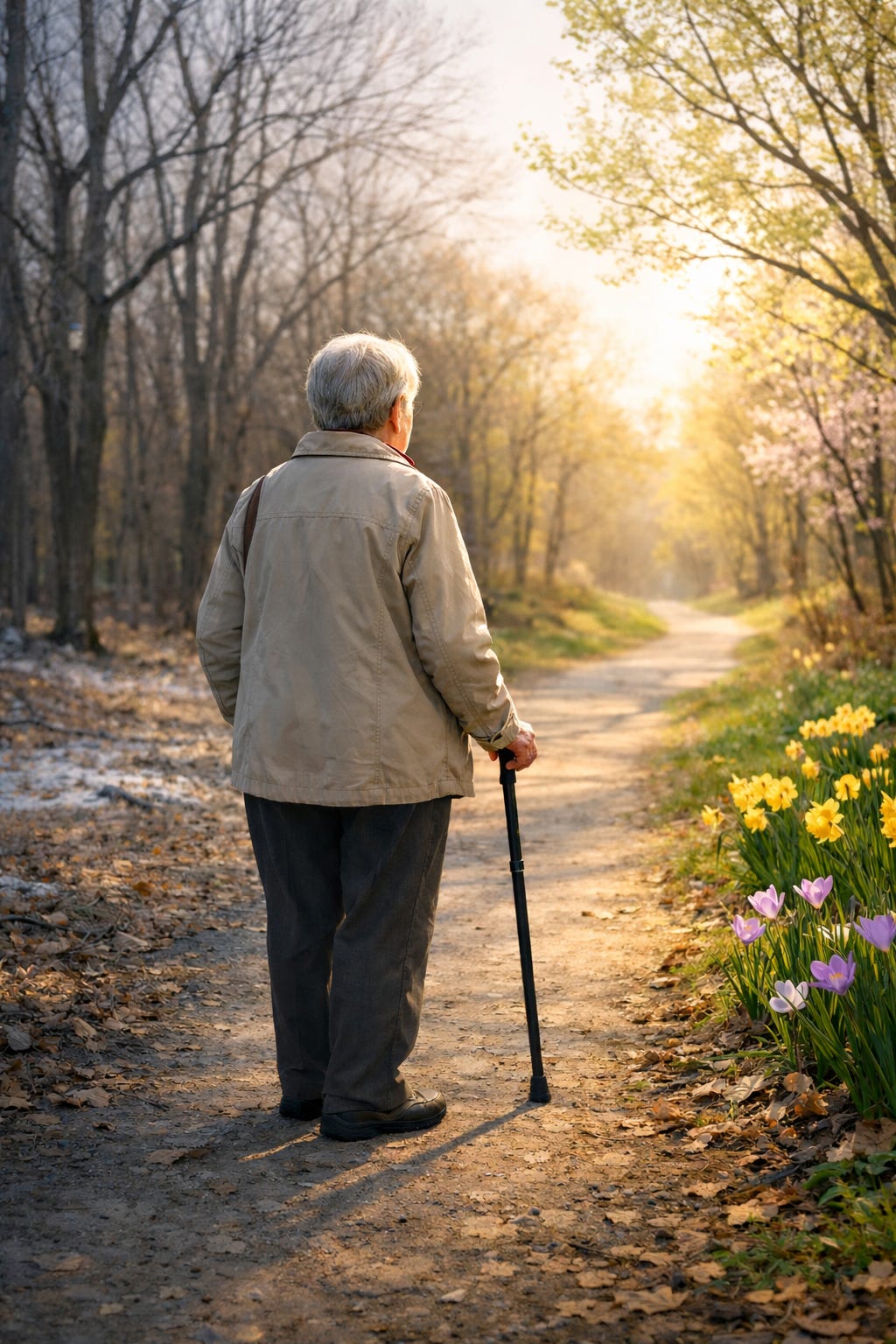
Welcome to March, dear friends.
This month, we’re exploring something powerful: the awakening that happens when winter finally loosens its grip. The vitality that stirs when light returns. The new growth that becomes possible when we let ourselves believe again.
Every Sunday in March, we’ll dive deep into one aspect of this awakening. Today, we start with something that might surprise you: courage.
Because spring doesn’t just wake up the flowers. It wakes up the part of you that’s been playing it safe.
Last March, I did something I’d been avoiding for three years. I signed up for a public speaking workshop - the kind where you stand at a podium in front of strangers who then give you feedback.
I’d been making excuses since 2022. Too busy. Too unprepared. Next month would be better.
Then on March 4th, after the first warm afternoon following weeks of gray, I opened my laptop and registered before I could talk myself out of it.
What changed? Nothing except the weather. But something about that particular spring day made it feel possible in a way January never did.
There’s actual science behind why spring makes brave things feel more doable.
Why Spring Rewires Your Relationship With Fear
When winter breaks, your body experiences a cascade of changes. Serotonin production increases with longer daylight. Vitamin D levels climb after months of deficit. Your circadian rhythm shifts, bringing more focused energy to your waking hours.
But here’s what matters most: seasonal changes create what psychologists call “temporal landmarks” - moments that feel like natural fresh starts.
Dr. Katherine Milkman at Wharton has studied this extensively. Seasonal shifts, especially winter to spring, are some of the most powerful fresh start moments we experience.
Why? Because when nature itself is visibly transforming, it becomes easier to believe you can transform too.
The earth takes an enormous risk pushing new growth through cold soil. Trees send out vulnerable buds that one late frost could destroy. Nature gambles on the future instead of staying safely dormant.
When you witness that kind of courage everywhere you look, your own risk-taking feels less foolish and more like joining something larger than yourself.
The Courage Paradox of Getting Older
Watching my parents and working with this community made me realise something about aging: you accumulate both more wisdom and more fear as the years pass.
You’ve seen more things go wrong. You’ve buried people you loved. You’ve watched your own body betray promises it used to keep. You know exactly how hard falling can be - literally and metaphorically - because you’ve felt that pain.
That’s not pessimism. That’s earned caution based on decades of real experience.
But here’s the paradox: the same life experience that teaches legitimate fear also teaches you something else. You’ve survived 100% of your worst days. You’ve started over after losses that felt impossible. You’ve adapted to changes you swore you couldn’t handle. You’ve been terrified before and done the brave thing anyway.
You have evidence of your own resilience that younger people simply don’t possess yet.
The question is: which evidence will you listen to this spring? The fear that knows what can go wrong, or the resilience that knows you can handle it when it does?
What “Brave” Actually Looks Like at This Stage
Let’s be clear about something. Brave at 70 or 80 looks nothing like brave at 30.
It’s not about adventure or reinvention or finding yourself. You already know who you are.
Brave, at this stage of life, looks like this:
Using your cane or walker in public for the first time, even though you feel like everyone’s staring
Admitting to your doctor that you’re forgetting things and it scares you
Telling your adult children you need help, after decades of being the one who helped them
Going to the grief support group six months after your spouse died
Getting the hearing aids instead of pretending you can still hear fine
Asking someone to repeat themselves instead of nodding and hoping you got it right
Saying no to hosting Thanksgiving because you don’t have the energy anymore
Giving up your driver’s license when you know it’s time
Trying the senior center even though you always said “I’m not old enough for that place”
Starting to date again at 75, terrified and hopeful at the same time
It’s brave to ask for help when you’ve spent your whole life being capable.
It’s brave to admit what you can’t do anymore while still celebrating what you can.
It’s brave to keep choosing life and connection when loss has carved holes in your world.
The Specific Fears We Don’t Talk About
The courage advice you read online rarely mentions the fears you’re actually facing.
They talk about trying new hobbies or stepping outside your comfort zone. But they don’t talk about the fears keeping you up at 3 AM:
What if I become a burden to my children?
What if I outlive my money?
What if I end up alone in a nursing home?
What if I lose my mind before I lose my body?
What if I’ve waited too long and I’m out of time?
These aren’t small fears about embarrassment or failure. These are existential fears about dignity, independence, and mortality.
And here’s what takes real courage: living fully despite these fears, not waiting until they’re resolved. Because they won’t be resolved. They’re part of the deal now.
Courage at this stage means saying “I’m scared AND I’m still going to try.”
The Connection Between Vitality and Vulnerability
I’ve noticed something over nine years of working with this community: the people who feel most alive at 75, 85, 95 are often the ones still willing to be vulnerable.
They admit when they don’t understand something. They ask for help without shame. They say “my balance isn’t what it was” instead of quietly avoiding situations. They tell their friends “I’m lonely” instead of pretending they’re fine.
They’re honest about using a magnifying glass to read. They laugh about needing three tries to get up from a low chair. They say “I need to sit down” without apologizing.
Vitality doesn’t mean pretending aging isn’t hard. It means engaging with life as it actually is, not as you wish it were.
But that kind of honesty requires enormous courage. Because every admission feels like giving something up. Every “I can’t anymore” feels like a small death.
Yet somehow, the people who can say those things out loud are the ones who seem most alive.
Why March Matters More at This Stage
Here’s something worth saying plainly: you don’t have unlimited springs left.
That’s not morbid. That’s mathematical. And it changes the equation entirely.
You can’t afford to wait for perfect conditions or perfect confidence. You can’t spend another year circling the thing you want to do, planning to start “when you’re ready.”
Spring comes whether you’re ready or not. And one spring, it will come without you.
That sounds harsh. But for many people in this community, it’s also clarifying. Liberating, even.
When you know your time is finite, the fear of looking foolish gets smaller. The worry about what people think matters less. The question becomes simple: Do you want to do this thing or not?
March is your reminder that the clock is ticking. Not to make you anxious. To make you brave.
What Holds You Back (And Why It Makes Sense)
“What if I can’t do it? What if my body fails me halfway through?”
This is a legitimate concern, not an excuse. Your body has failed you before. But here’s what I’ve learned: most things can be adapted. Most groups are kinder than you fear. Most activities have versions for different abilities. Ask about modifications before you say no. You might be surprised.
“I’ll become a burden if I try this and something goes wrong.”
This is the fear under so many other fears. But staying small and isolated to avoid being a burden doesn’t actually help anyone. Your adult children would rather help you live fully than watch you shrink safely. Ask them. They’ll tell you.
“I don’t have time left to start something new. Why bother?”
Because the alternative is sitting in your chair waiting to die. Because six months of watercolor class is better than six months of wishing you’d tried. Because the woman who started learning piano at 89 had three years of joy before she passed. Would you rather she’d had three years of regret instead?
“Everyone will see me struggle. I’ll look incompetent.”
Yes, they might. And? People who judge seniors for being beginners are not people whose opinions matter. The rest of us are cheering for you.
A Different Way to Think About This
What if courage at this stage isn’t about being fearless? What if it’s about being terrified and doing it anyway because you’d rather feel scared than feel nothing?
What if it’s not about big dramatic changes, but small acts of defiance against the voice telling you to settle?
What if the bravest thing you can do this March is simply refuse to make yourself smaller than you have to be?
What You’ll Learn Below the Paywall
In the premium section, we move from understanding to action with practical tools designed specifically for this stage of life:
✅ The Real Fear Inventory – Questions that address the actual fears you face: becoming a burden, losing independence, running out of time
✅ Age-Appropriate Courage Exercises – Four weeks of practices that acknowledge your real limitations while building genuine bravery
✅ Brave Things That Actually Matter – Not “try a new restaurant” but “ask for help,” “admit what you can’t do,” “use mobility aids without shame”
✅ Real Stories from Your Peers – How Margaret used her walker in public, how Robert joined a grief group, how Linda admitted she needed help
✅ The Burden Fear Breakthrough – Specific strategies for the fear that stops most seniors from trying anything new
✅ Your March Courage Commitment – A realistic template that accounts for energy, health, and actual life constraints