

When Winter Feels Lonely: Navigating Loss, Distance, and Holiday Heartache

Last week, I visited the mother of a dear friend. Her husband had died suddenly this spring—one moment, they were chatting in the living room, the next, he was gone. A heart attack, no warning, no goodbye. I wrote about what happened next and the importance of being prepared here.
Just months ago, they had active, full lives. They traveled together. They visited the grandkids regularly—flying internationally to see my friend and his family. They had plans for next year’s cruise. They talked about where they’d spend their next anniversary.
And then, in an instant, everything stopped.
After a lifetime spent with her partner—fifty-plus years of shared mornings, inside jokes, daily routines, and quiet companionship—she is now navigating life alone. Yes, she still has some friends. She has family who care. But they have their own lives, their own routines. And at the end of the day, she goes home to an empty house where every room holds memories of a life built together.
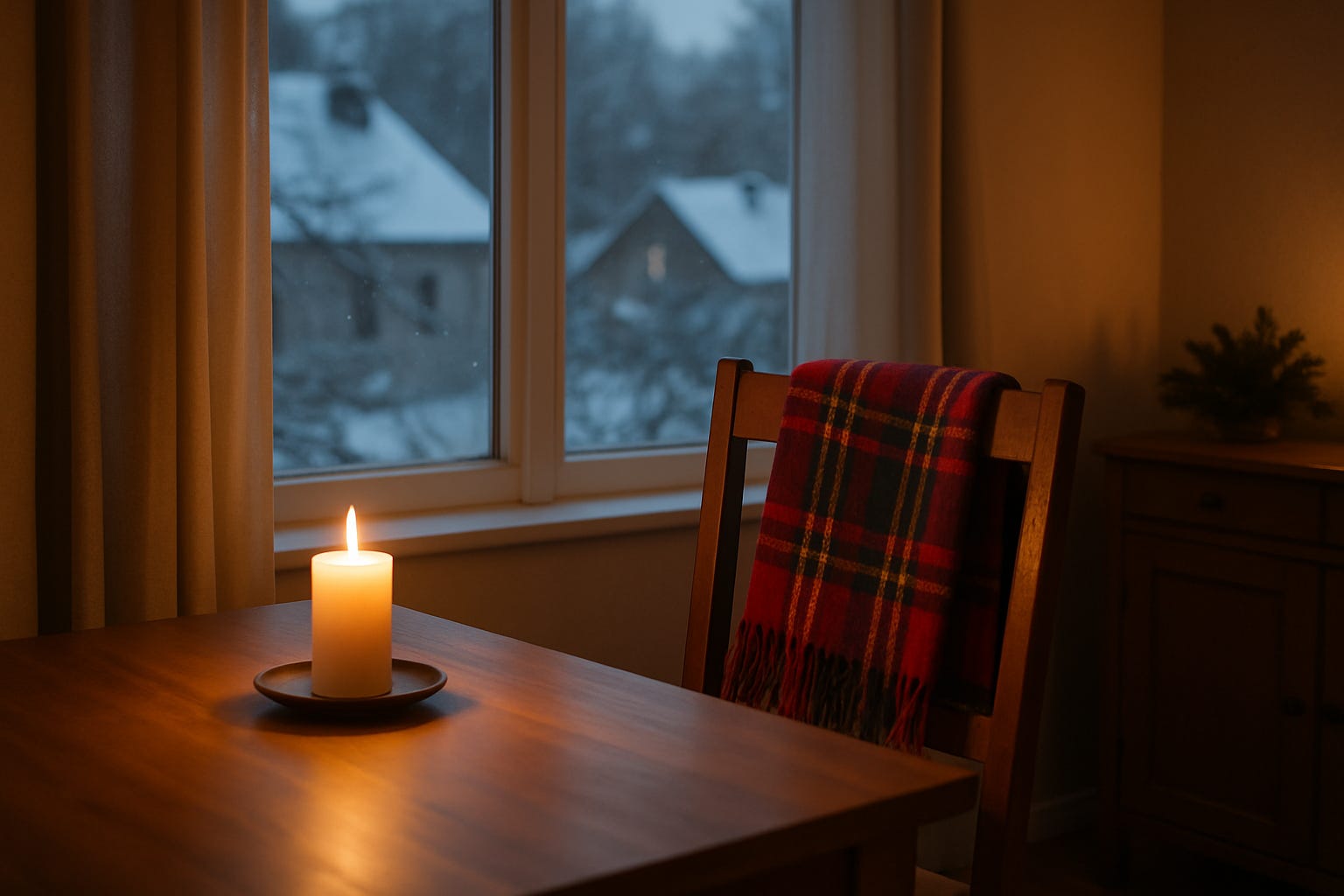
Unfortunately, this is a common situation for so many seniors. And the holiday season? It amplifies everything. The empty chair at the table. The traditions that feel impossible to continue. The questions from well-meaning people: “What are you doing for the holidays?” when you honestly don’t know the answer.
If you’ve ever felt this kind of loneliness—the kind that makes your chest tight and the walls feel like they’re closing in—you already know: winter loneliness after 60 isn’t just sad. It’s dangerous.
The Silent Epidemic
Here’s what the research shows, and what doctors rarely tell you:
Chronic loneliness increases your risk of heart disease by 29% and stroke by 32%
Social isolation is as harmful to your health as smoking 15 cigarettes a day
Loneliness accelerates cognitive decline and doubles your dementia risk
Isolated seniors are 2-3 times more likely to experience clinical depression
And winter?
Winter makes everything exponentially worse.
The darkness itself changes your brain chemistry—less sunlight means less serotonin, the neurotransmitter that regulates mood and connection. Cold weather keeps you inside, eliminating the casual encounters that used to sustain you. The holidays magnify every empty chair, every missing voice, every tradition you can no longer celebrate the same way.
This isn’t just “feeling blue.” This is a public health crisis that nobody wants to talk about.
The Three Faces of Winter Loneliness
Winter loneliness shows up in three distinct ways, and understanding which one you’re experiencing can help you find the right path forward:
1. Grief Loneliness
You’re missing someone who’s gone—a spouse, a sibling, a lifelong friend. The holidays are brutal because everywhere you look, there are reminders of traditions you used to share. The empty chair at Thanksgiving. The stocking you can’t bring yourself to put away. The inside jokes nobody else understands. The cruise brochures still arriving in the mail.
2. Distance Loneliness
The people you love are alive and well—they’re just too far away. Your kids live across the country or overseas. Your grandchildren FaceTime you, but you can’t hug them. Your old friends retired to Florida. You’re genuinely happy for them, but you still eat dinner alone every night.
3. Circumstantial Loneliness
Life changes have isolated you through no fault of your own: you can’t drive at night anymore, your mobility has declined, you’re on a fixed income, your entire friend group has passed away or moved to assisted living. You’re the last one standing in your old neighborhood, and starting over at 70 feels impossible.
Many of us experience all three at once. My friend’s mother is dealing with all three—grieving her husband, with her son living overseas, and realizing her entire social structure was built around being part of a couple. That’s called compound loneliness, and it’s the hardest kind to break.
Why the Standard Advice Fails
You’ve heard it all before:
“Just join a club!”
“Volunteer somewhere!”
“Get out more!”
“Stay positive!”
And maybe you’ve tried. Maybe you even felt worse afterward because joining a club requires energy you don’t have when you’re depressed. Making new friends at 70 feels nothing like it did at 30. And “staying positive” feels like gaslighting when you’re genuinely struggling.
Here’s what nobody says out loud: Winter loneliness after 60 requires completely different strategies than generic advice offers.
What Actually Works
Small, specific actions can dramatically reduce loneliness—even when circumstances can’t change. I’ve seen it happen. I’m watching my friend’s mother slowly rebuild a life after a devastating loss. I’ve heard from hundreds of readers who transformed their winters from isolated to connected.
In the premium section below, I share:
✅ A quick assessment to identify YOUR specific type of loneliness (and why this matters for what you do next)
✅ How to honor someone you’ve lost without drowning in grief during the holidays
✅ Practical ways to reach out when you feel like a burden or fear rejection
✅ The exact words to say when someone asks, “What are you doing for the holidays?” and you have no answer
✅ How to create solo traditions that feel meaningful instead of pathetic
✅ The “Winter Wellness Pod” concept—a framework for building mutual support when your old community is gone
✅ Red flags that loneliness has become dangerous, and what to do about it
✅ Real transformation stories from seniors who rebuilt connection after devastating loss
This isn’t about pretending everything is fine. It’s about acknowledging what’s hard and building real connection anyway.