

What Makes Holiday Rituals So Powerful?

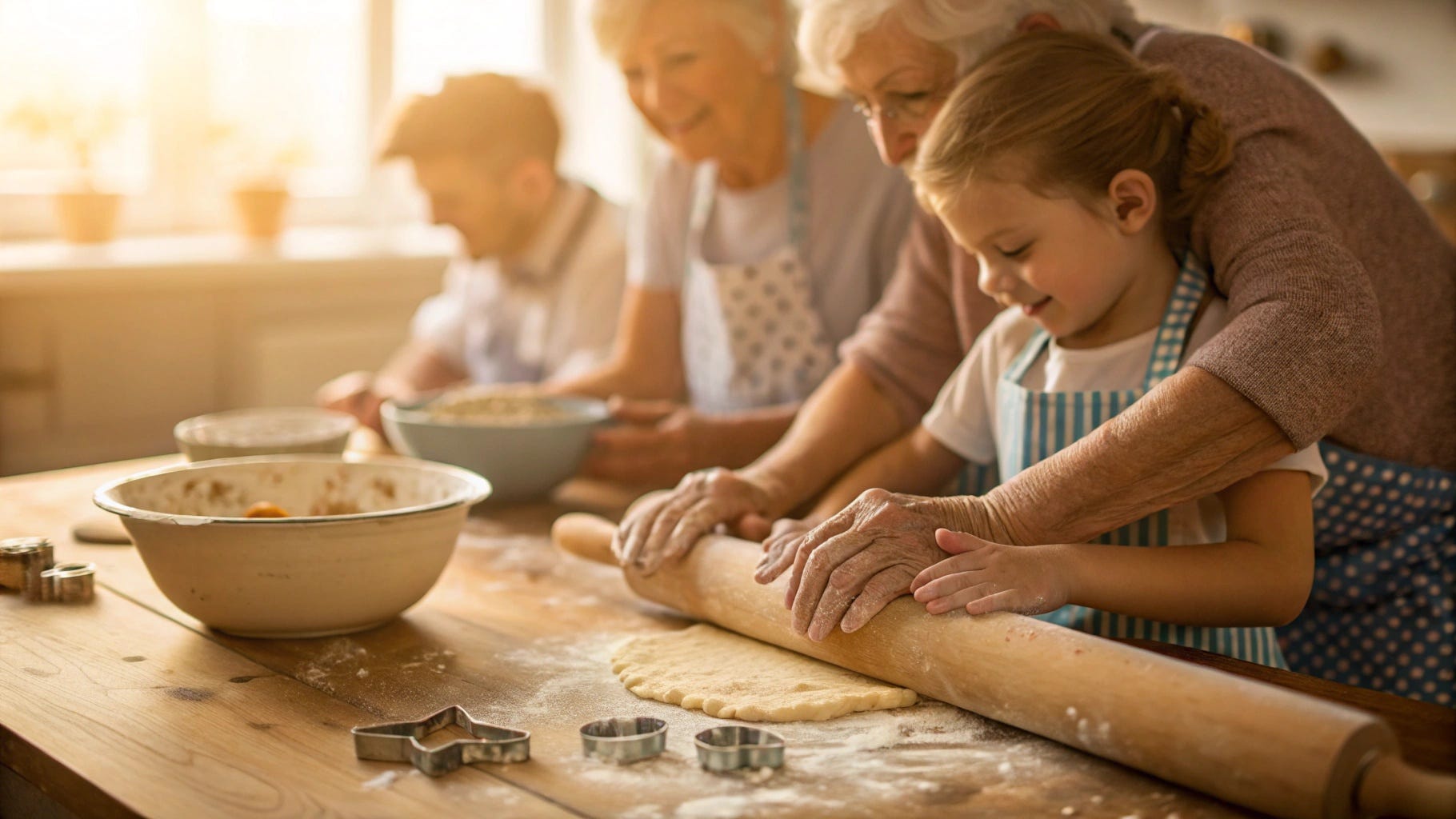
There’s a moment that happens every year in my friend Sarah’s kitchen, right around the third week of November. She pulls down the same chipped ceramic bowl her grandmother used for pie dough, the one with the faded blue flowers around the rim, and suddenly the whole house smells like butter and cinnamon and something harder to name. Memory, maybe. Or belonging. Her kids wander in without being called, drawn by something more than the promise of apple pie.
This is what rituals do. They create pockets of predictability in a world that often feels like it’s spinning too fast. And as we move deeper into the holiday season, these repeated, meaningful actions become more than just traditions. They become anchors. They become gratitude made visible.
Why Your Brain Craves the Familiar
Scientists have been studying rituals for years, trying to understand why humans across every culture have been so drawn to repetitive, ceremonial behaviors. What they’ve discovered is fascinating. When we engage in rituals, particularly ones we’ve done before and anticipate doing again, our brains light up in very specific ways. The prefrontal cortex, which handles planning and intention, activates alongside the limbic system, where emotion lives. We’re not just going through the motions. We’re feeling our way through them.
Harvard Business School professor Michael Norton has spent much of his career researching this very thing. His work shows that families who maintain holiday rituals report significantly higher satisfaction with their gatherings than those who don’t. It’s not about the ritual itself being elaborate or expensive. It’s about the fact that it repeats. That it’s expected. Norton found that even something as simple as a specific way of setting the table or a particular song played before dinner increases the sense of connection people feel with each other (Source: BBC)
The neuroscience backs this up in surprising ways. When we anticipate something positive, something we’ve experienced before and enjoyed, our brains release dopamine not when the thing actually happens, but in the anticipation of it. This is why the week before Thanksgiving, when you’re planning the menu and imagining everyone gathered around the table, can feel almost as good as the day itself. Your brain is already rewarding you for the ritual you’re about to perform.
And here’s where it gets even more interesting. Rituals don’t just make us feel good in the moment. They actually regulate our nervous systems. Research shows that engaging in familiar rituals reduces cortisol levels and activates the parts of our brain associated with emotional regulation. When life feels chaotic, rituals provide a framework. They tell our bodies that even though the world is unpredictable, this one thing will happen the same way it always has. And somehow, that’s enough to let us exhale.
The Gratitude Hidden in Repetition
There’s something almost magical about the way rituals slow us down. In a season that’s often characterized by rushing from one obligation to the next, rituals force us into the present moment. You can’t mindlessly scroll through your phone while you’re carefully crimping the edges of a piecrust the way your mother taught you. You can’t be worrying about next week’s deadlines while you’re gathered with your family, each person sharing what they’re grateful for before the meal begins.
This is where gratitude and ritual intersect in the most beautiful way. Gratitude, at its core, requires presence. It requires noticing. And rituals, by their very nature, demand our attention. When we perform an action with intention, especially one that’s been repeated year after year, we can’t help but notice the details. The weight of the menorah in your hands. The smell of pine from the tree you’re decorating. The sound of your child’s voice reading the same holiday story you read at their age.
Clinical research supports what many of us feel intuitively. Studies have shown that people who engage in regular gratitude practices during the holidays experience measurable improvements in mental health, including lower levels of depression and anxiety, better sleep quality, and even stronger immune systems (source: Jefferson County Health Center)
But here’s what makes rituals particularly powerful as gratitude practices: they don’t require you to sit down with a journal and force yourself to think of three things you’re thankful for. The gratitude is baked right into the action itself. When you light the same advent candles your family has lit for generations, you’re not just creating ambiance. You’re acknowledging continuity, honoring the people who came before you, and recognizing your place in something larger than yourself. The ritual does the work of gratitude for you.
Dr. Robert Emmons, one of the world’s leading researchers on gratitude, has found that people who frame their regular activities as meaningful rituals rather than mere habits experience greater life satisfaction and sense of purpose. The difference isn’t in what they’re doing but in how they’re approaching it. A ritual carries intention. It carries meaning. And that meaning, more often than not, is rooted in appreciation.
The beautiful thing is that rituals don’t require a particular family structure or living situation to be meaningful. Whether you’re hosting a dozen relatives or spending the holidays alone, whether you’re continuing traditions that go back generations or starting fresh ones this year, rituals can be designed to fit your life exactly as it is right now. The magic isn’t in the perfection of the ritual. It’s in the repetition, the intention, and the way it creates space for you to notice what’s already good.
For Plus Members: Building Your Own Gratitude Rituals
The following section is available to Plus members. Upgrade your membership to access practical, personalized guidance for creating meaningful gratitude rituals that fit your life, whether you’re celebrating with a full house or finding meaning in solitude.