
Your Garden Is a Brain Workout — And Spring Is the Perfect Time to Start
There’s a moment that most gardeners know well.
You’re on your knees, hands in the soil, pulling up weeds or tucking in a seedling. The sun is warm on your back. Your mind goes quiet. And for an hour, you’re completely, peacefully present.
It feels good. You’ve always known it feels good.
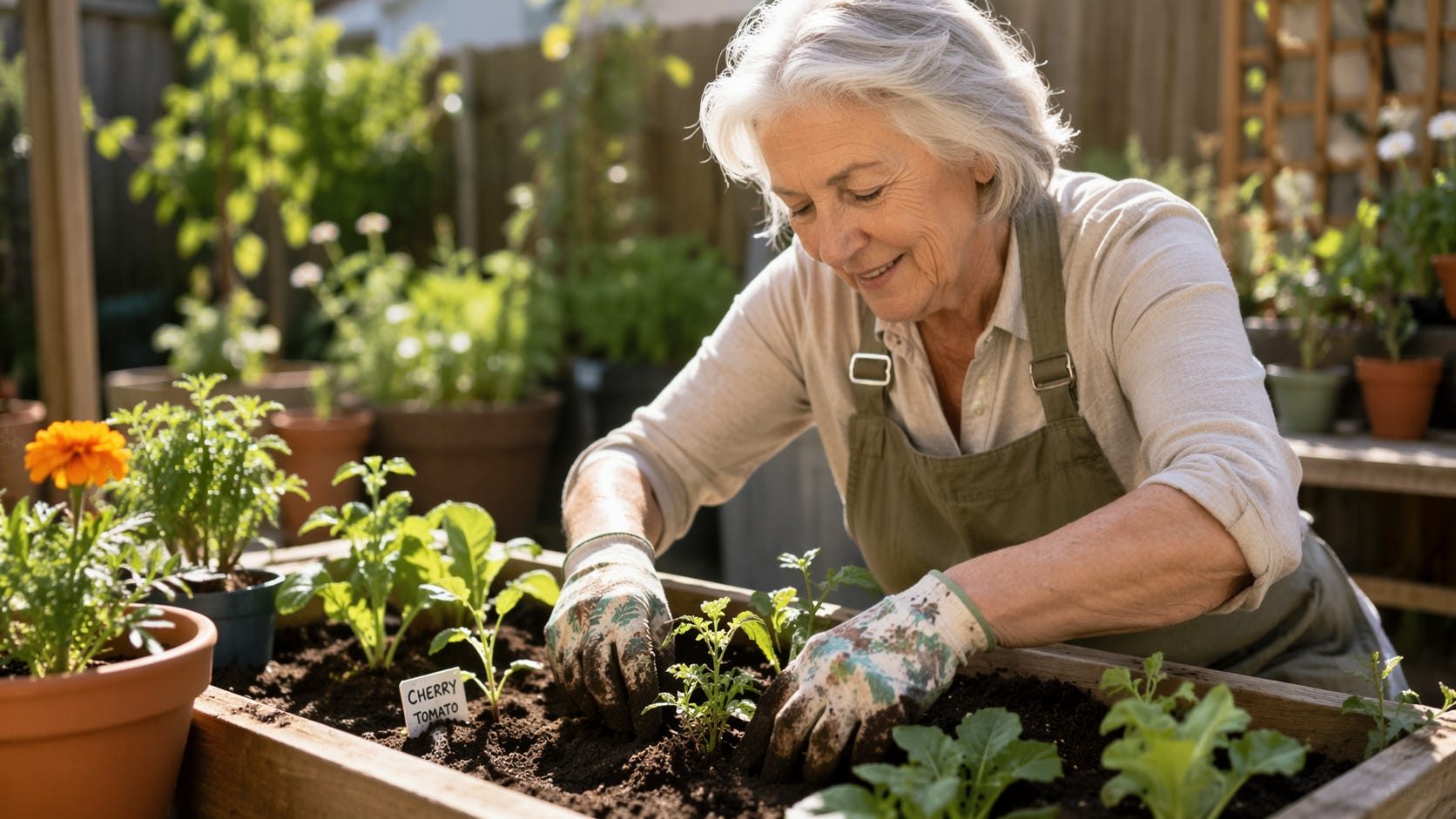
What you may not have known is that while you were out there doing something you love, your brain was quietly building new connections, reducing inflammation, lowering stress hormones, and — according to some of the latest research — actively protecting itself from cognitive decline.
Gardening isn’t just a hobby. It’s one of the most powerful brain-health activities available to us. And it’s free.
The Science That’s Finally Catching Up to What Gardeners Already Knew
Researchers have spent years studying what happens to the brain during regular gardening. The results keep coming back the same way: this activity is genuinely, measurably good for your mind.
A large study published last year — involving nearly 137,000 participants aged 45 and older — found that people who gardened regularly were significantly less likely to report memory problems or limitations in daily functioning tied to cognitive decline. Not slightly less likely. Significantly less likely.
Another longitudinal study followed people from childhood into their late 70s and 80s. The conclusion? Those who reported gardening at age 79 showed stronger cognitive performance relative to their childhood baseline than those who never gardened. The gardeners’ brains were, in measurable terms, more resilient.
And here’s the biological part that I find genuinely fascinating.
After a session of gardening, researchers measured significant increases in two key brain proteins: BDNF (brain-derived neurotrophic factor) and PDGF (platelet-derived growth factor). These are essentially growth hormones for your brain — substances that help build and protect neurons, strengthen memory circuits, and support learning. They don’t call BDNF “Miracle-Gro for the brain” for nothing.
You plant seeds. Your brain grows new connections. There’s a beautiful symmetry there.
Why Gardening Works When Other Activities Don’t
Here’s the thing about most “brain training” apps and memory games: they’re narrowly focused. They strengthen the specific pathways you’re already using, without building much that’s new.
Gardening is different. It’s what scientists call a bundled activity — one pursuit that simultaneously engages multiple systems in your body and brain at once.
Think about everything that happens when you garden:
Your body moves. Digging, bending, carrying, reaching — gardening is a physical activity. And we know that physical activity is one of the single most evidence-backed tools for protecting brain health. A recent study confirms that walking 7,000 steps a day measurably reduces mortality and cognitive risk. Gardening delivers those steps (and those muscle contractions) naturally, without feeling like “exercise.”
Your brain problem-solves. What does this plant need? Is that soil too dry? Should I move this seedling to more shade? Gardening is a continuous, gentle stream of observation and decision-making. That’s mental engagement — and mental engagement builds cognitive resilience.
Your senses are activated. The smell of soil, the texture of leaves, the colors of flowers, the sound of birds — sensory richness is deeply stimulating for the aging brain. Novelty and sensory input together are among the strongest triggers for neuroplasticity, your brain’s ability to rewire and adapt.
Your stress drops. Cortisol — the stress hormone that, when chronically elevated, actively damages memory structures in the brain — has been shown to fall measurably during and after time in nature. Gardening doesn’t just feel calming. It is calming, at a physiological level.
You connect. Community gardens. A shared plot with a neighbor. Trading tomatoes over a fence. Gardening is quietly one of the most social activities older adults engage in — and we know that social connection is as powerful for brain health as almost anything else.
No app bundles all of that into an hour.
A Word About What Gardening Can (and Can’t) Do
I want to be honest with you here, because I think honesty is more useful than hype.
The research does not show that gardening can reverse dementia or halt cognitive decline once it has already begun. One of the longitudinal studies noted that while gardeners showed stronger baseline cognitive performance, they didn’t necessarily experience slower decline between the ages of 79 and 90.
What gardening appears to do is build a stronger foundation — what scientists call cognitive reserve. Think of it like financial savings. If you consistently invest in your brain’s health across your 60s and 70s, you arrive at later life with more reserve to draw on. The brain can absorb more change before symptoms appear.
You’re not defying aging. You’re building the best possible version of your aging brain.
That’s still a very big deal.
You Don’t Need a Big Garden — Or Any Garden At All
I hear this a lot: “That’s lovely, but I live in an apartment” or “My knees won’t let me do that anymore.”
Fair. Let’s talk about that.
Raised beds and elevated planters have transformed gardening for people with mobility challenges. You garden standing up, or seated in a chair. No kneeling required. These can be set up on a patio, a balcony, or a small paved outdoor space.
Container gardening requires nothing more than a pot, some soil, and a windowsill. Herbs — basil, mint, rosemary, chives — are forgiving, fragrant, and useful. You grow them, you use them in your kitchen, you notice them every day. That’s enough.
Indoor plants count too. The sensory engagement, the routine of caring for something living, the satisfaction of watching growth — these are not small things. They’re the mechanism.
Community gardens exist in most towns and cities — shared plots where you can rent a small bed, garden alongside neighbors, and build social connection at the same time. Many have accessible pathways and raised beds specifically for seniors.
The goal isn’t a perfect vegetable garden. The goal is regular, engaged contact with growing things.
What to Plant This April If You’re Just Starting
April is one of the best months to begin. The soil is warming, the days are lengthening, and the timing is right for a wide range of beginner-friendly plants.
Here are five I’d suggest for new or returning gardeners:
Cherry tomatoes — rewarding, fast-growing, and almost impossibly satisfying to eat straight off the vine. Grow in a pot or a small raised bed.
Basil — a kitchen herb that thrives in a sunny windowsill and smells incredible. Plant near your tomatoes if you have both.
Lettuce — one of the easiest crops to grow and one of the fastest. You can be eating your own salad within 30 days of planting.
Marigolds — bright, cheerful, and almost impossible to kill. They also repel common garden pests naturally. A great choice if you just want something beautiful without the pressure of edibles.
Sunflowers — plant a seed, watch something magnificent happen. Sunflowers grow quickly and are one of the most joyful plants you can grow. They also attract pollinators, which gives you the pleasure of watching butterflies and bees visit regularly.
None of these require expertise. They require attention, curiosity, and the willingness to get your hands a little dirty.
This Month Is Your Invitation
April is National Garden Month — a reminder that this is the season for beginning, returning, or simply paying more attention to the growing things already around you.
The timing couldn’t be better. Spring gardening isn’t just pleasant. According to the latest science, it’s one of the most nourishing things you can do for your brain.
Not a puzzle. Not an app. Not a supplement.
A patch of soil, some seeds, and your own two hands.
I’ll leave you with this thought from one of the researchers behind the cognitive gardening studies:
“Gardening likely supports cognitive health because it bundles physical activity, mental engagement, stress reduction, and other healthy lifestyle habits into one activity. It’s very hard to find something else that does all of that at once.”
Very hard indeed.
Go find your gloves. 🌿
What are you growing this spring? Whether it’s a pot of herbs on your kitchen counter or a full vegetable patch in the back garden, I’d love to know. Drop it in the comments — let’s inspire each other.


Gosh I would never have associated these. I enjoy gardens but never really thought much about them until recently as I’m currently planning a major home move where I am actively seeking a garden in the main for my cats, but reading this I think I could certainly benefit as well. Thank you for the inspiration.
Just came in from tidying up my front bed and dumping some winter boughs in the compost. I have my peppers and tomatoes doing well in my indoor setup. I am tired and sweaty and my back is not great but so happy. We are still expecting some snow on Sunday ( boo) so will enjoy the rest of 20c and sun today.