
What You Could Start This May: Online Learning Guide

Five years ago, learning a new language meant evening classes with strict schedules. Writing your life story meant a workshop at your local community center, if you were lucky. Teaching others required a formal job. Today, all of that has dissolved.
Technology didn’t just change how we stay in touch. It quietly removed the barriers that blocked entire possibilities: geography, schedules, cost, judgment. The result is strange and worth noticing: if you’ve ever thought “I wish I could...” — learn something you love, finally write that story, teach the next generation, reconnect across age groups — the door is open. It’s global, often free, and it exists right now.
This is what May is really about: not just renewal, but the quiet realization that you could actually start something you’ve been thinking about.
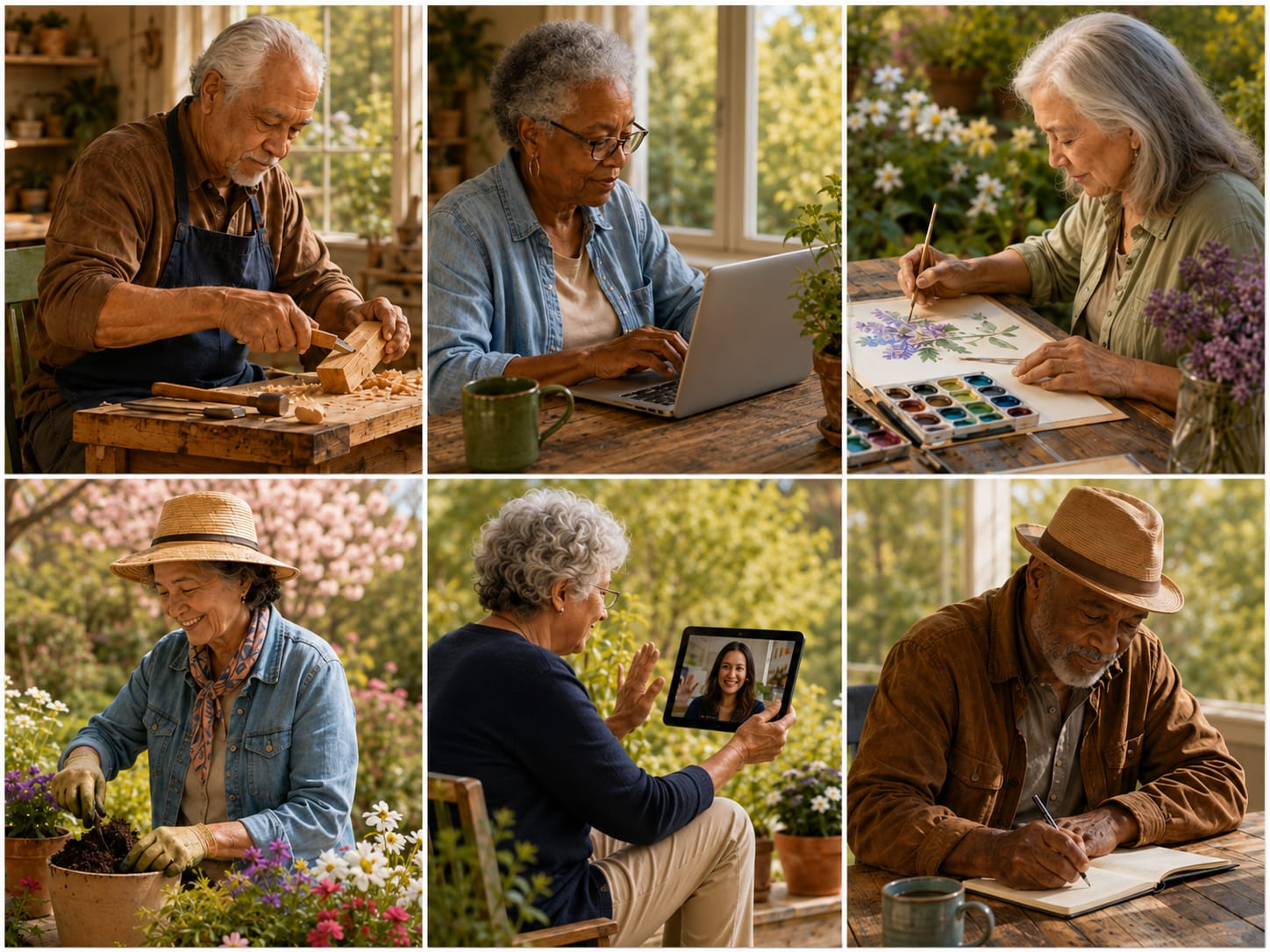
So What Do You Want to Do?
Learning Something You Always Wanted — Languages
Learning a new language as an adult is different than learning in school. You’re not preparing for a test. You’re feeding curiosity. Maybe you’re reconnecting with heritage, preparing for travel, or simply want to think in a different way. Research is clear: adult brains learn well when the motivation is genuine.
If you want to learn Spanish, Mandarin, French, or Arabic:
Duolingo — Free app or $12.99/month premium. 5-10 minute daily lessons, gamified. Good for conversational basics and vocabulary. Many people use this as their main tool; others pair it with something else.
Babbel — $12.99/month billed yearly. Structured, slower-paced lessons (30 minutes each). Better if you want grammar explanations alongside conversation.
Community college online — Search “[your city] community college” for Spanish or another language. Live classes on Zoom with a human instructor. $50-200/semester. Real accountability, real people to practice with.
Creative Hobbies — Whatever You’ve Been Thinking About
Hobbies aren’t career pivots — they’re ways to make something real with your hands or mind. Many people put these off for decades thinking “I’m too old to start.” Online platforms have made it possible to learn privately, at your pace, from excellent instructors.
Woodcrafting (Spoon Carving, Furniture, Boxes)
You want to make something with wood. Maybe carved spoons, wooden boxes, simple furniture. You’ve thought about it for years.
Skillshare — $32/year or $14.99/month. Search “wood carving,” “spoon carving,” or “woodworking for beginners.” Project-based classes, 20-60 minutes each. Watch, make something, optionally share it for community feedback.
Udemy — Usually $10-15 per course (always on sale). Search “beginner woodcarving” or “hand carving techniques.” Longer, comprehensive courses. Lifetime access.
YouTube — Free. Channels like “Doug Out” (wood carving), “Woodworking for Mere Mortals,” or “I Like to Make Stuff.” Learn a technique, try it. No pressure.
First step: Watch one free YouTube video on spoon carving. If you’re intrigued, buy one Udemy course ($15). Make your first spoon. Then decide if you want to go deeper.
Photography
Capture the world as you see it. Learn composition, light, storytelling through images.
Skillshare — Search “photography for beginners” or “smartphone photography.”
Udemy — “Introduction to photography” courses. $10-15.
Local camera clubs — Search “[your city] photography club.” Many meet online now and welcome beginners.
Painting/Watercolor
Put color on paper. Messy, playful, no rules.
Skillshare — “Watercolor painting,” “acrylic painting for beginners,” or “painting landscapes.”
YouTube — Channels like “The Art Sherpa” teach painting step-by-step, very beginner-friendly.
Local art centers — Many offer both online and in-person watercolor classes.
Gardening
Grow vegetables, flowers, herbs. Connect with seasons and soil.
Skillshare — “Container gardening,” “growing herbs,” “vegetable gardening for beginners.”
YouTube — Channels like “MIgardener” teach practical gardening month-by-month.
r/gardening — Join Reddit. Ask questions, share photos, get advice from thousands of gardeners.
Music (Guitar, Piano, etc.)
Learn an instrument. Pick up one you abandoned. It’s never too late.
Skillshare — “Beginner guitar,” “piano basics,” “ukulele for beginners.”
YouTube — Channels like “Justin Guitar” or “Piano Lessons on YouTube” teach systematically.
Local music lessons — Live instruction, accountability, real teacher feedback.
Writing Your Story (Memoir, Legacy, Essays)
Your life contains stories nobody else has. Specific moments, decisions, people, surprises. Writing these down isn’t about becoming a published author — it’s about preservation. Your grandchildren might read this. You might want to clarify your own thinking. Either way, it matters.
Senior Planet Writing Groups — Free. AARP/OATS. Live workshops specifically for writers 60+. Write alongside others, get feedback, hear other people’s stories. (US-based but online)
WriteMentor — Submit your writing, get feedback from experienced writers. Monthly mentorship sessions. Community of writers at all levels.
Scribophile — Free to join. You write, submit to the community, get peer feedback. You also give feedback to others. More for committed writers.
Teaching, Mentoring, Sharing Your Expertise
You know things. How to fix things. How to manage projects. How to calm down under pressure. How to listen. There are young people, kids, nonprofits, and communities that need exactly what you know.
SCORE — Free mentoring for small business owners. You bring business experience (management, marketing, accounting); they bring the startup. Video or in-person mentoring. (US-based)
Catchafire — Match your skills (writing, design, accounting, marketing, grant writing) with nonprofits needing short-term help. Flexible, remote projects. (Global)
Senior Storytellers — Connect with children through storytelling. Share stories, read books, build intergenerational relationships. Simple, meaningful, no experience needed. (US-based)
Example scenario: “I spent 30 years in accounting and want to help startups understand their finances.” Go to SCORE, apply to be a mentor. You’ll be matched with someone starting a business. Spend 1-2 hours/month advising them. That’s it. Real impact, flexible schedule, skills that matter.
Connection Across Generations
The loneliness epidemic is real. But so is the fact that people of different ages can offer each other things nobody else can: perspective, skills, energy, patience, wisdom.
Reddit communities — Subreddits like r/gardening, r/writing, r/photography, r/woodworking, r/RetroNintendo. People aged 18-80+ discussing the same interests. Search your hobby + “subreddit.”
Nextdoor — Local community network. You’ll meet neighbors aged 20-80+. Real relationships, real problems solved together.
MeetUp — Online and in-person groups around interests. Photography clubs, book clubs, language exchanges, hobby groups. Many have mixed ages.
If Income Interests You
Some people want to supplement retirement income. Others discover they miss working but on their own terms. Remote work removes the barriers that once blocked older workers: commute, age discrimination, rigid schedules.
AARP Job Board — Positions from age-friendly employers. Remote roles in customer service, data entry, writing, bookkeeping. (US-focused)
FlexJobs — $15/month subscription. Vetted remote roles. No scams.
Upwork — Freelance platform. Find projects: writing, editing, virtual assistance, design, tutoring. You set your rates.
Some Common Worries
“I’m not tech-savvy.”
Senior Planet exists specifically for this. Duolingo is designed to be simple. YouTube works on a phone. Most platforms expect you to be learning technology as you go. If you get stuck, there’s customer support or a younger friend nearby.
“What if I don’t stick with it?”
Then you move on to something else. The point isn’t to find something you’ll do forever. It’s to discover what actually interests you. That’s valuable information.
“Is it actually free, or does it get expensive?”
Many are genuinely free. Some are $15-50/month. A few charge one-time course fees ($10-80). Nothing here requires a big upfront commitment. Start free, then decide.
“Will I be the only older person doing this?”
No. Over 55% of adults 45+ are actively engaged in online learning. You’re not the edge case — you’re the majority.
“Is this safe? Real, or a scam?”
Stick with names you recognize: AARP, universities, YouTube, platforms with years of reviews. If something asks for money upfront promising guaranteed results, skip it. Everything on this list is established.
Start With Curiosity
Pick one thing from the list above that made you pause. That’s the one.
Spend 20 minutes looking at it. Read the description. Watch a sample video if they have one. See if it feels possible.
You’re not deciding to commit to months of study. You’re just looking. Most platforms have free tiers or free trials. Try it for two weeks. If it doesn’t stick, something else will.
Technology opened a door. On the other side are possibilities that didn’t exist five years ago. Learning something because you want to. Teaching because you have knowledge to share. Writing your life down. Connecting with people across decades and borders.
May is the month when things grow. Not because of effort or willpower, but because the conditions allow it.
The conditions are here. A language you’ve been curious about. A skill you could teach. A hobby you’ve been thinking about. A story you could write.
Pick the thing that made you pause reading this. Look at one platform. See if it feels right.
That’s all. Not a commitment. Just curiosity.