The Doctor Who Lived to 103 Had a Ten-Year Plan at 102
What I learned from Dr. Gladys McGarey about purpose, hard times, and why everything needs to move
Hi, it’s Diana from Healthy Seniors,
This year, I want to do something a little different. Alongside our usual tips and stories, I want to share books that have genuinely moved me — the kind that make you sit back and think, “Okay, I needed to hear that.”
The first one? The Well Lived Life by Dr. Gladys McGarey.
If you haven’t heard of Dr. Gladys, buckle up. This woman was extraordinary.
Who Is Dr. Gladys McGarey?
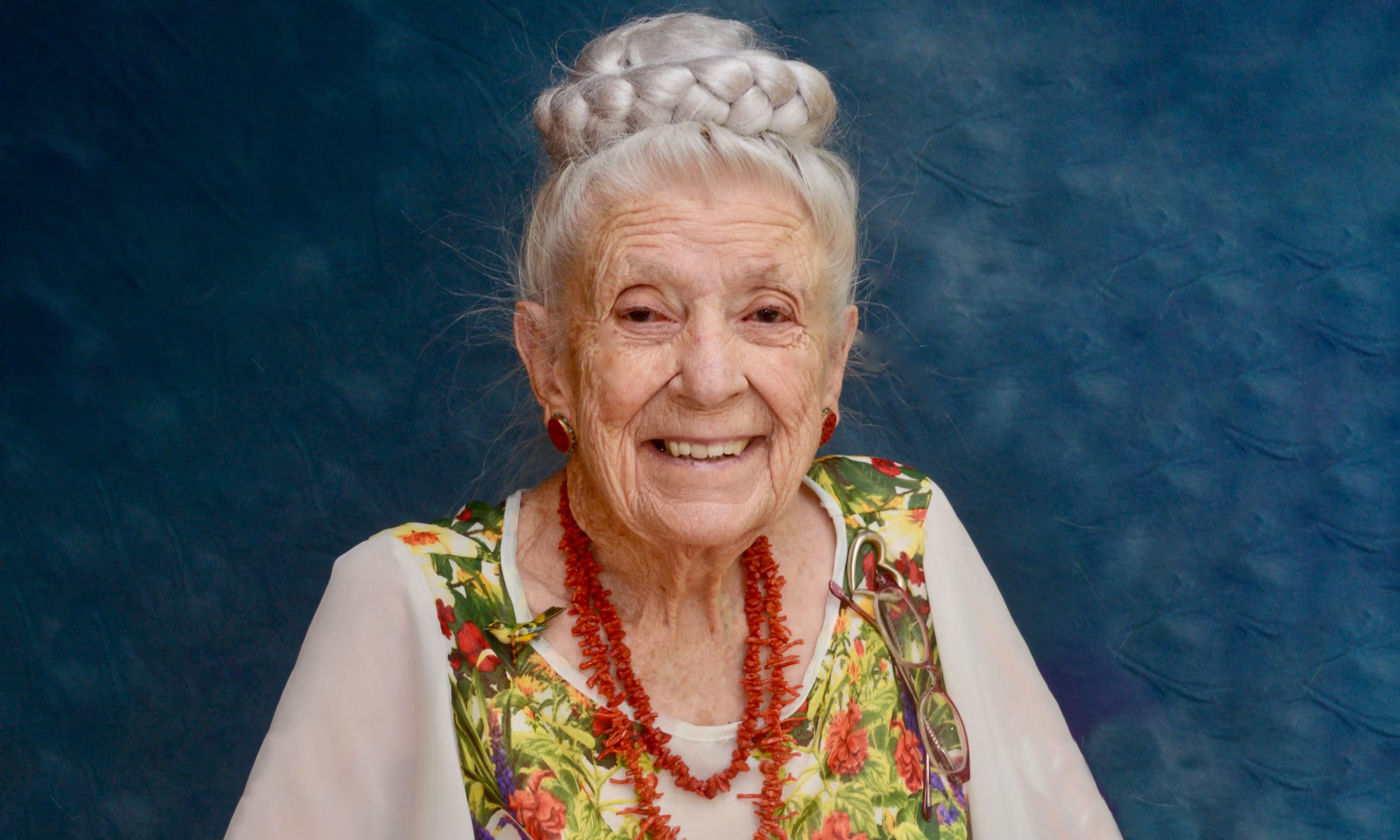
Dr. Gladys McGarey lived to 103 years old (she passed away in September 2024, just two months shy of 104). But here’s what makes her story incredible: she didn’t just live a long time — she lived fully, right up to the end.
She was born in 1920 in the Himalayan foothills of India, where her parents were missionary doctors treating lepers and the “untouchables” no one else would help. At age nine, she looked out a train window and saw Mahatma Gandhi leading his famous Salt March.
She came to the United States at 16, became a doctor when women couldn’t even open bank accounts, and spent her residency sleeping on an examining table because there were no quarters for female doctors. She raised six children. She co-founded the American Holistic Medical Association and became known as the “Mother of Holistic Medicine.”
And then, at age 70, after 46 years of marriage, her husband handed her divorce papers. He’d been carrying them in his briefcase for six months.
When Everything Fell Apart
Dr. Gladys called the divorce “the hardest thing I’ve ever faced” — harder even than surviving cancer twice or losing one of her children.
Her husband Bill wasn’t just her spouse. He was her business partner, her co-founder, the person she’d built her entire life around. When he left her for another woman, she was devastated. Lost. Couldn’t imagine life without him.
But here’s what she did: she got a new license plate for her car.
It said: BE GLAD.
She left their shared clinic and started over with her daughter Helene in Scottsdale. And slowly — very slowly — something shifted.
“It’s not a matter of getting over stuff,” she said years later. “It’s a matter of living through it.”
It took her 23 years to fully accept the divorce. She didn’t truly make peace with it until she was 93 years old. But when she did, she realized something powerful: the divorce had given her back her voice.
“Prior to that, I really didn’t trust my own voice,” she admitted. She’d been dyslexic as a child, always felt slow, never believed she had anything important to say on her own. But after the divorce, she wasn’t “Bill and Gladys” anymore. She was Gladys McGarey, M.D.
She eventually wrote her ex-husband a letter thanking him for giving her freedom.
The years after 70? She called them the best of her life.
The Six Secrets of a Well-Lived Life
In her book, Dr. Gladys shares the wisdom she gained from more than a century of living — and six decades of practicing holistic medicine. These aren’t vague platitudes. They’re practical, hard-won truths from someone who lived through the Great Depression, World War II, discrimination, heartbreak, illness, and loss.
Here are her six secrets:
1. Spend Your Energy Wildly
Not recklessly — wildly. Pour yourself into what matters. Embrace life fully. Dr. Gladys talks about “juice” — that life force, that energy that makes you feel alive. Don’t waste it picking at old wounds. Direct it toward what you want to become.
She compares it to having a cut on your arm. As long as you keep picking at the scab, it hurts. If you’re spending your energy on something that keeps you miserable or stuck, you’re just picking at that wound over and over. Stop. Look around. The world is full of amazing things waiting for your energy.
2. All Life Needs to Move
Physically, mentally, spiritually — everything needs motion. When we get stuck (and we all do), life stops flowing the way it should. Movement helps us release trauma and old patterns. It keeps the juice flowing.
This one is deeply personal for me.
I’ve read Dr. Gladys’s book three times now, and every time I come back to this secret. There have been so many moments in my own life when I felt completely stuck — didn’t know which direction to go, felt frozen by indecision or fear or just the weight of everything.
Her advice became my lifeline: “Find something that flows and put your energy there.”
I think of life like a river. Most of the time, we’re in the current — moving, flowing, heading somewhere. But every now and then, we get caught in a stagnant pool on the shore — stuck in the muddy shallows where the water doesn’t move. We spin in circles. We exhaust ourselves trying to force something that isn’t working.
Dr. Gladys taught me that when that happens, you don’t fight the stagnant water. You look for where there’s movement. You find the current again. You put your energy there, and you let it carry you back into the flow of your life.
That shift — from forcing to flowing — has changed everything for me. And I come back to it again and again.
3. You Are Here for a Reason
Purpose isn’t some grand mission you discover once and hold forever. It’s the “juice” you find in everyday moments that keep you grounded. Dr. Gladys had a ten-year plan at 102. She never stopped asking, “What am I here to do?”
Her purpose evolved throughout her life: doctor, mother, pioneer of holistic medicine, teacher, author. After her divorce, her purpose shifted again — this time to finding her own voice, practicing with her daughter, traveling to Afghanistan at 86 to teach safer birthing practices.
Your purpose doesn’t have to be huge. It just has to be yours.
4. You Are Never Alone
Build real community. Not just family, but people who see you and support you. After her divorce, Dr. Gladys rebuilt her life by creating meaningful connections — with her daughter, her patients, her mission.
She talks about being surrounded by love — not just from relatives, but from people she helped and who helped her in return. At 102, she said, “I have a wonderful life and I love it because I’m surrounded by love.”
Loneliness can harm health as much as smoking. Connection heals. Community sustains. You don’t have to do life alone.
5. Everything Is Your Teacher
Pain, setbacks, illness — they’re not punishments. They’re lessons. Dr. Gladys survived cancer twice. She lost a child. She endured the hardest divorce imaginable. And she says each experience taught her something she needed to learn.
She didn’t see medicine as a war against disease. She saw it as a way to connect with the living force within another human being. Pain has purpose. Setbacks contain wisdom. If you can live through your struggles instead of just trying to get over them, they become your teachers.
6. Love Is the Most Powerful Medicine
Not the easy, surface kind of love. The deep kind — love for yourself, love that heals, love that sees the humanity in everyone. This was the foundation of everything Dr. Gladys did as a doctor and as a person.
She believed that unless our primary focus is enhancing life rather than just killing disease, we’ll never understand where healing truly comes from. Love — for yourself, for others, for the process — is what allows real healing to happen.
Why This Book Matters to Me
Reading Dr. Gladys’s story reminded me why I started Healthy Seniors in the first place.
We’re told aging means slowing down, accepting less, making peace with limitations. And yes, our bodies change. Things get harder. But Dr. Gladys shows us something else: that the second half of life can be when we finally find our voice. When we stop living for others and start living for ourselves. When we learn what we’re really made of.
At 86, she traveled to Afghanistan to teach safer birthing practices, reducing infant mortality by 47%. At 90, she jumped out of a cake at her birthday party. At 100, she gave a TEDx talk. At 102, she had a ten-year plan to create a village for living medicine.
She didn’t deny the hard parts. She lived through them. And that made all the difference.
A Note About the Writing
The Well Lived Life isn’t a dense medical textbook. It’s warm, conversational, full of stories from her incredible life. Dr. Gladys writes the way she probably talked — with humor, honesty, and a little bit of mischief. It’s the kind of book you can pick up when you need a reminder that you’re stronger than you think.
If you’re navigating your own hard season — whether it’s health issues, loss, loneliness, or just feeling stuck — this book might be exactly what you need.
My Question for You
I’d love to make book recommendations a regular thing here at Healthy Seniors. But I also want to hear from you.
What books have inspired you lately? What have you read that made you think differently about aging, health, purpose, or just life in general?
Drop your recommendations in the comments. I’m building my reading list for the year, and I’d love to know what’s moved you.
Until next time — keep your juice flowing.
💙 Diana
P.S. Dr. Gladys McGarey passed away in September 2024 at age 103, surrounded by love and still making plans. Her foundation, The Foundation for Living Medicine, continues her work. If her story resonates with you, her book is still available — and it’s worth every page.


As it happens, I have a couple of aging-well books on my shelf, one I just finished and the other I recently started. This must be a new genre!
I've finished "Katya Noskov's Last Shot" by Dana Goldstein. Best.Title.Ever! Katya is a retired assassin, retired because her eyes aged her out. After decades in the shadows, she connects with three other women at a speed dating evening, and their adventures open up surprises from each one. Great story, fun to read, that highlights the fact that we all need friends who love us in all our complexity.
The book I'm just into is called "How To Age Disgracefully" by Clare Pooley. Several seniors begin their acquaintance in a Senior Citizen's Social Club, in a building that also houses a nursery for children. These seniors come with shades of social baggage, and mayhem ensues.
These books, while not dissimilar, are different enough to keep the reader engaged even when read one after the other. Are we seniors--am I at 72--casting about for glimpses of sauciness in our old age? Has the excitement and stimulation of youth fled? Thank you for an article that answers with a strong NO!