The Best Exercise for Seniors Might Be the Simplest One
Can you guess it?
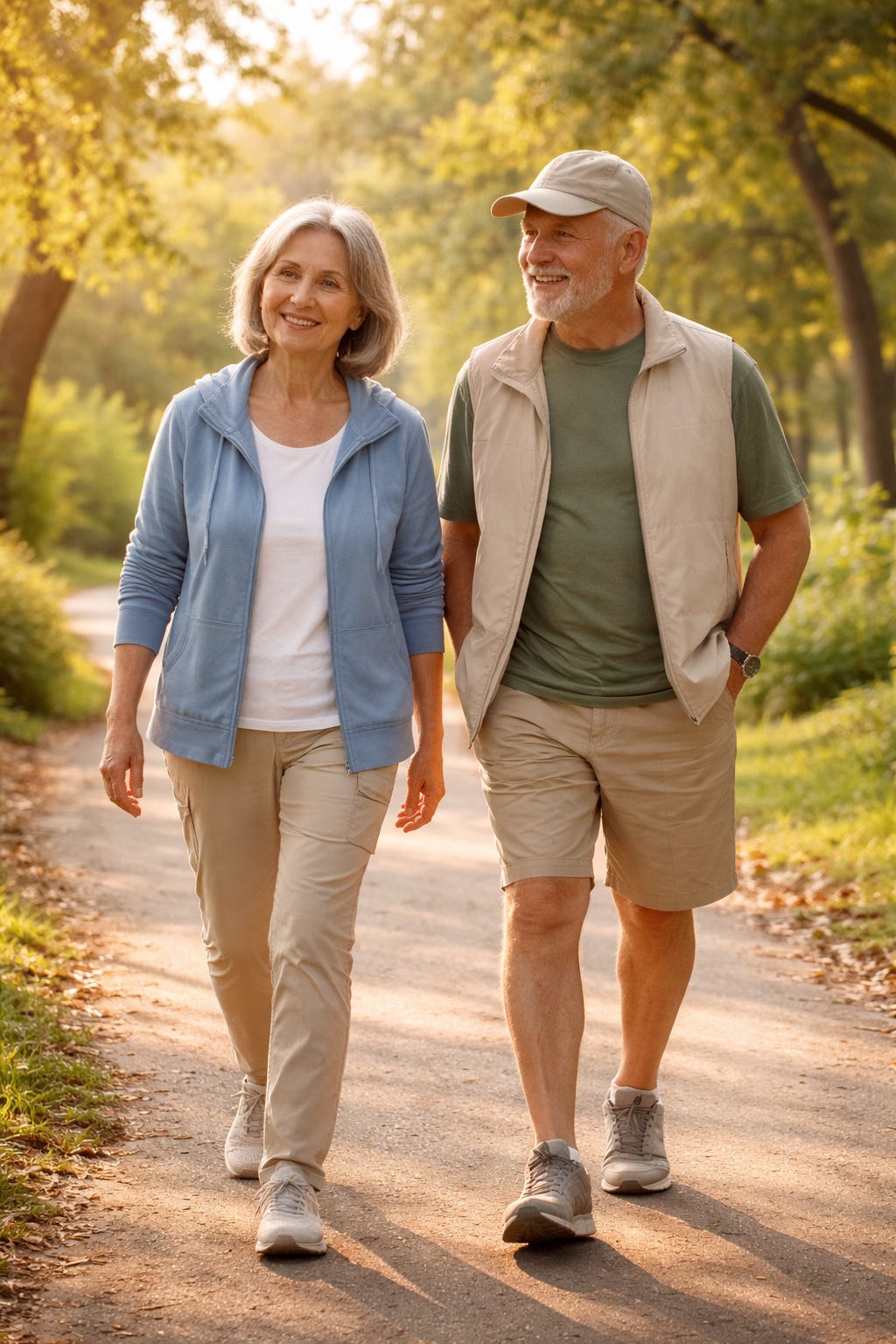
When it comes to staying healthy as we get older, it’s easy to assume that real exercise means joining a gym, following a structured program, or pushing through workouts that leave you sore for days. For many seniors, that idea alone is enough to put them off trying. What often gets overlooked is that one of the most powerful things you can do for your health requires nothing more than a pair of comfortable shoes and a little time.
Walking. That’s it.
The science — and the experience of millions of active older adults — backs it up. Walking is one of the safest, most effective, and most sustainable forms of exercise available to seniors. And the best part? You’ve been doing it your whole life. No learning curve. No equipment. No gym membership. Just you, the open air, and one foot in front of the other.
Why So Many Seniors Stop Moving — And Why That Matters
Staying active gets harder as we age — and not just physically. There’s a mental and emotional side to it, too.
Maybe you’ve dealt with an injury that set you back and never quite got your routine going again. Maybe the activities you used to enjoy — tennis, hiking, swimming — have become too demanding on your body. Maybe retirement changed your schedule in ways that disrupted habits you didn’t even realize you had. Or maybe you’ve simply slowed down gradually over the years, and one day realized how little movement had crept into your daily life.
Whatever the reason, inactivity is incredibly common among older adults — and it carries serious consequences. A sedentary lifestyle is linked to higher rates of heart disease, type 2 diabetes, obesity, cognitive decline, depression, and falls. Physical inactivity is considered one of the leading risk factors for premature death worldwide.
The encouraging news: you don’t need to do a lot to turn things around. Research consistently shows that even modest increases in daily movement can have a significant impact on health outcomes. You don’t need to run marathons or lift heavy weights. You just need to start moving — and walking is the perfect place to begin.
Why Walking Works So Well for Older Adults
As we age, joints become more sensitive, recovery takes longer, and high-impact activities that once felt manageable can start to cause more harm than good. Walking sidesteps all of that. It’s low impact by nature, meaning it gets your heart pumping and your muscles working without putting unnecessary stress on your knees, hips, or ankles.
Unlike many forms of exercise, walking is also self-regulating. Your body naturally finds a pace that works for it. If something feels off, you slow down. If you’re feeling good, you pick it up. There’s no instructor pushing you past your limits, no machine setting a pace you have to keep up with. You’re completely in control.
The benefits go well beyond the physical, too. Regular walks have been linked to improved mood, sharper memory, and lower rates of anxiety and depression. There’s something about being outdoors, moving at your own pace, and taking in your surroundings that does wonders for the mind. Many seniors describe their daily walk as the most peaceful part of their day — a time to think, decompress, or simply be present.
And then there’s the social side. Walking is one of the easiest activities to share with others — a neighbor, a friend, a grandchild, or even a dog. That social connection matters more than many people realize. Loneliness is one of the most underappreciated health risks for older adults, and a simple daily walk can be a surprisingly effective remedy.
What Regular Walking Can Do for Your Body
Even moderate, consistent walking delivers real, measurable health benefits. Here’s a closer look at what happens inside your body when you make walking a regular habit:
Heart health. Walking is a cardiovascular exercise, which means it strengthens your heart and improves circulation. Regular walkers tend to have lower blood pressure, better cholesterol levels, and a significantly reduced risk of heart disease and stroke. Even 30 minutes of brisk walking most days of the week can make a meaningful difference.
Weight management. Metabolism naturally slows with age, making it easier to gain weight and harder to lose it. Walking helps counteract this by burning calories and keeping your metabolism active. A consistent walking habit, combined with a sensible diet, is one of the most sustainable ways to manage weight over the long term.
Balance and fall prevention. Falls are one of the leading causes of injury among older adults, and the fear of falling can itself become a barrier to staying active. Regular walking strengthens the muscles in your legs, hips, and core that are responsible for keeping you stable and upright. Over time, it also improves coordination and your body’s ability to recover when you lose your footing. The more you walk, the steadier you become.
Blood sugar control. Walking after meals has been shown to help regulate blood sugar levels by prompting your muscles to absorb glucose from the bloodstream. This is especially valuable for seniors managing type 2 diabetes or those at risk of developing it. Even a short 10-minute walk after eating can have a noticeable effect.
Bone and joint health. Weight-bearing exercise like walking helps maintain bone density, which naturally declines with age. This is particularly important for reducing the risk of osteoporosis and fractures. And despite what some people assume, walking is actually beneficial for most joint conditions — the movement promotes circulation in the cartilage and helps keep joints lubricated and flexible.
Better sleep. Physical activity during the day helps regulate your sleep cycle, making it easier to fall asleep and stay asleep at night. Many seniors who struggle with insomnia or restless sleep find that adding a daily walk to their routine makes a real difference — often without any other changes.
Cognitive function. Walking has been shown to benefit the brain, too. Studies have found that regular aerobic exercise — including walking — can increase the size of the hippocampus, the area of the brain responsible for memory and learning. It may also slow cognitive decline and reduce the risk of dementia. Walking doesn’t just keep your body young — it keeps your mind sharp as well.
Getting Started: Keep It Simple
The biggest mistake people make when starting a new exercise habit is trying to do too much too soon. With walking, there’s no need for that. Start with whatever feels comfortable — even 10 or 15 minutes a day is a genuinely good beginning.
Pick a time that fits naturally into your day. Some people love a morning walk to start the day with fresh air and a clear head. Others prefer an evening stroll after dinner. Neither is better than the other — what matters most is consistency. A short walk you actually do beats a long walk you keep putting off.
Give yourself permission to start slowly. Your first week might look like three or four short walks. The goal in the beginning isn’t distance or speed — it’s simply building the habit of showing up. Once walking becomes part of your routine, increasing the duration and pace will happen naturally.
A good long-term target for most seniors is around 30 minutes of moderate-paced walking most days of the week. Don’t let that number intimidate you if you’re just starting out. You can break it into smaller chunks — three 10-minute walks throughout the day provides many of the same benefits as one continuous 30-minute walk.
Tips for Making It Enjoyable and Sustainable
Exercise you enjoy is exercise you’ll actually keep doing. Here are some ways to make walking something you genuinely look forward to:
Wear the right shoes. A well-cushioned, supportive pair of walking shoes makes a bigger difference than most people expect. Look for something with a comfortable fit, good arch support, and solid traction to prevent slipping. Your feet and joints will notice the difference.
Dress for the conditions. On hot days, wear light, breathable clothing and a hat. On cool days, layer up. On dark mornings or evenings, wear something with reflective detail so drivers can see you. Being comfortable and safe removes one more reason not to go.
Stay hydrated. Bring water, especially on warm days. It’s easy to underestimate how much fluid you lose even on a gentle walk. Make it a habit to drink a glass of water before you head out, too.
Create a walking playlist or podcast queue. Music can set the pace and lift your mood. A gripping podcast or audiobook can make the time fly. Some walkers even save a favorite series exclusively for their walks — it becomes something to look forward to.
Change your route. Variety keeps things interesting. Explore a new neighborhood, find a nearby park, discover a trail you’ve never tried. Even reversing your usual route gives you a fresh perspective on familiar surroundings.
Make it social. Invite a friend, join a local walking group, or call someone on the phone while you walk. The time passes faster, and you’re more likely to show up when someone else is counting on you. Many communities have senior walking groups — a quick search online or a call to your local recreation center can point you in the right direction.
Track your progress. Keeping a simple log of your walks — the date, duration, and a note about how you felt — can be surprisingly motivating. Watching those entries add up over weeks and months is its own reward. If you enjoy technology, a pedometer or fitness tracker can make step-counting fun and give you a satisfying daily goal to hit.
Be patient with yourself. There will be days you skip. That’s normal and it doesn’t mean you’ve failed. The goal isn’t perfection — it’s a long-term habit. If you miss a day, just go the next day.
Walking Through the Seasons
One common reason people fall off a walking routine is the weather. With a little flexibility, you can keep walking year-round.
In summer, go early in the morning or later in the evening to avoid the heat of the day. In winter, layer up and choose well-maintained paths that are less likely to be icy. On truly miserable days — heavy rain, extreme cold, dangerous ice — move your walk indoors. A shopping mall is a surprisingly good walking venue: flat, climate-controlled, and often busy with other walkers in the morning hours. Many community centers and gyms also have indoor tracks that welcome seniors.
The changing seasons can actually become one of the quiet joys of a walking routine. Spring blossoms, summer greenery, fall foliage, and crisp winter mornings each bring their own kind of beauty. When you walk regularly, you start to notice things you never did before — the way your neighborhood changes week by week, the birds that appear in different seasons, the neighbors you start to recognize. Walking connects you to your world in an unhurried way that’s hard to replicate.
One Step at a Time
You don’t need to overhaul your lifestyle to start feeling better. You just need to start moving — a little more, a little more consistently, over time. Walking is one of those rare things that’s genuinely good for nearly every part of you: your heart, your joints, your mind, your mood, your sleep, and your social life.
It asks very little of you. No special skills, no expensive equipment, no intimidating learning curve. Just the willingness to show up and take that first step.
So the next time you’re wondering what you should be doing for your health, the answer might be right outside your front door. Lace up, step out, and see where your feet take you. Every walk you take is an investment in the version of yourself that stays independent, active, and feeling good — for years to come.
Enjoyed this article? Please share it with a friend. We deliver simple, practical healthy-aging guidance straight to your inbox every week — written for real people who want to feel their best.


