Japan Has Been Testing Robot Caregivers for 20 Years
Here’s What They’ve Actually Learned

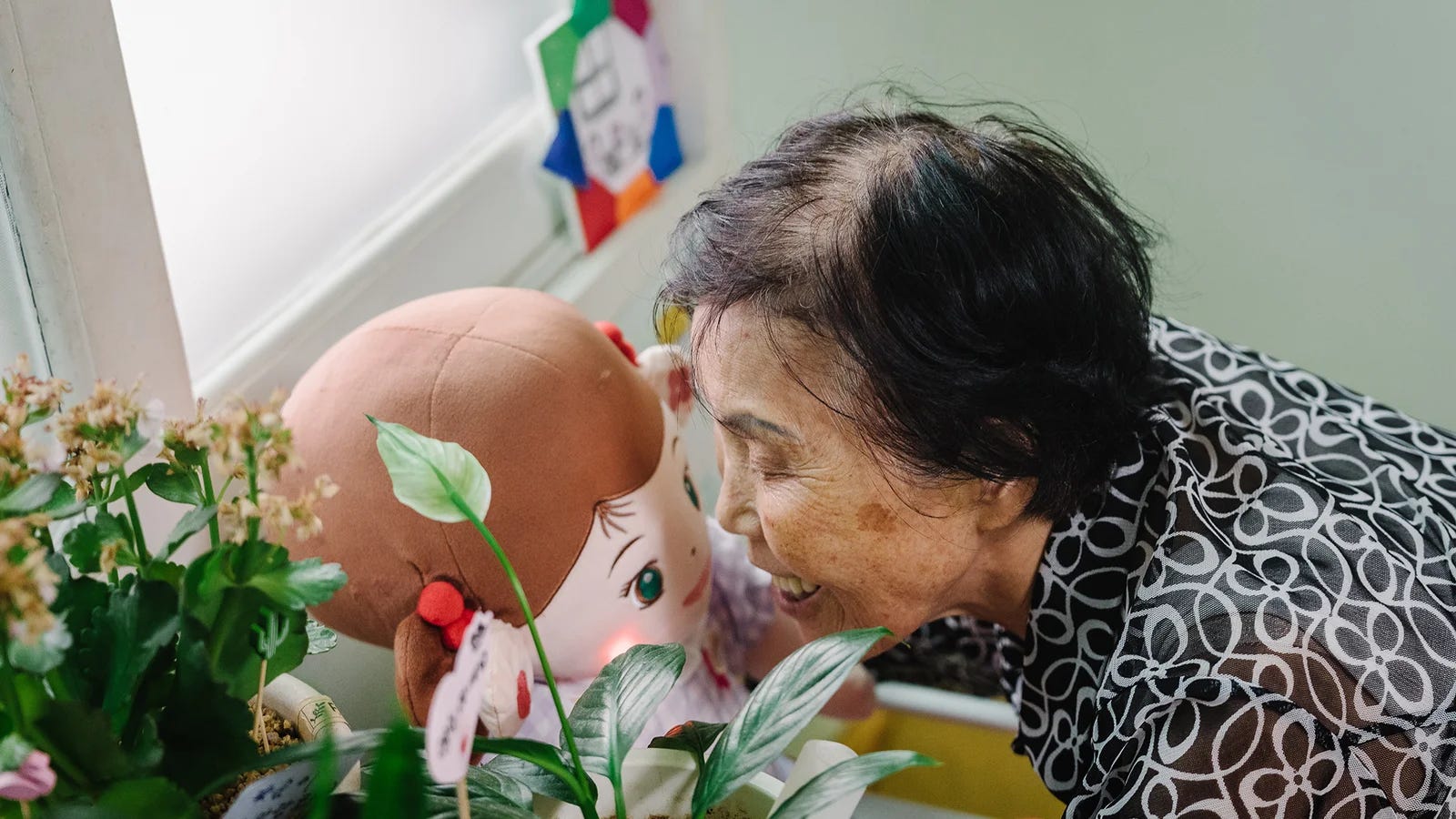
In a welfare center in the Guro district of Seoul, a 78-year-old woman named Kim Jeong-ran cradles a small doll-shaped robot in her arms.
“Grandma, I miss you even when you’re by my side,” the robot says in a chirpy voice.
Kim’s eyes fill with tears. Not from sadness. From recognition.
She lives alone. Her children live far away. Before the robot arrived, she told the social workers at her center that what she feared most was not death. “I’ve lived long enough,” she said. What she feared was the silence. The days that passed without anyone speaking to her.
That robot is called a Hyodol. It is named after a Korean word rooted in the Confucian tradition of caring for one’s elders. As of late 2025, more than 12,000 of them have been placed in the homes of elderly people living alone across South Korea.
And South Korea is not alone. Half the world is watching.