
How To Manage Chronic Pain as a Senior
What's Really Going On, What Actually Helps, and How to Reclaim Your Days
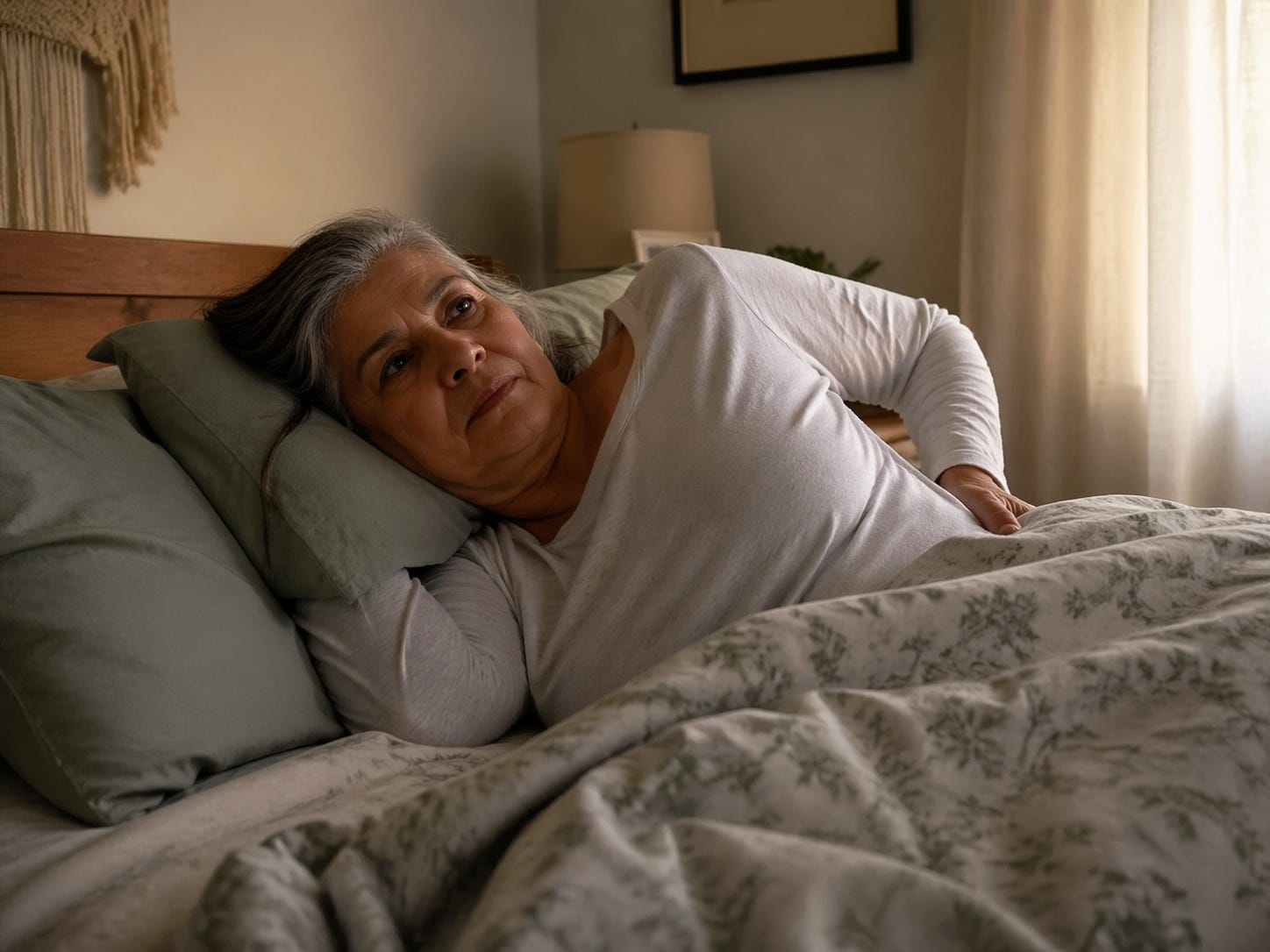
Before you even open your eyes in the morning, you do the check-in.
You’ve done it so many times it’s automatic now. A quiet, half-conscious scan of your body — shoulders, hips, knees, back — before you’ve even decided to be awake. How bad is it today? Can I do what I had planned? Will I need to cancel again?
If you know that feeling, this article is for you.
Not because it’s going to tell you to try yoga, or think positively, or push through the discomfort. You’ve heard all of that. You’ve probably tried most of it. What you deserve instead is honesty — about what’s actually happening in your body, about what the research genuinely supports, and about how to stop letting pain make all the decisions in your life.
Because that’s the real goal. Not the elimination of pain — for many people living with chronic conditions, that isn’t realistic, and pretending otherwise does more harm than good. The goal is a life that feels full, meaningful, and genuinely yours, even on the hard days.
That’s possible. Let’s talk about how.
Part 1: Understanding What’s Actually Happening
Most of us were taught to think of pain as a warning signal — your body’s way of saying something is wrong here, pay attention. And in the short term, that’s exactly what it is. You touch a hot stove, pain tells you to pull your hand away. You twist your ankle, pain tells you to rest it.
But chronic pain — pain that persists for months or years — works differently. And understanding how it works is one of the most genuinely useful things you can learn.
Your Nervous System Got Stuck
When pain continues long after an injury has healed, or when it feels disproportionate to the underlying condition, it’s usually because of something called central sensitisation. Over time, a nervous system that has been in pain mode begins to amplify its signals — like turning up the volume on a radio that was already too loud. The nervous system becomes hypersensitive, responding to things that shouldn’t hurt, or registering ordinary sensations as painful.
This is not “all in your head.” It is a real, documented, physiological process. Your nervous system is doing exactly what it was designed to do — protect you from harm. It has simply got stuck in alert mode, and it needs help recalibrating.
Understanding this matters for one important reason: it shifts the goal. If your pain is being amplified by a sensitised nervous system, then the path forward isn’t just about treating the joint or the disc or the nerve ending. It’s about gently, consistently sending your nervous system the message that it’s safe — that it can stand down.
Everything in this guide, from movement to sleep to emotional wellbeing, is in service of that message.
Acute Pain vs. Chronic Pain
Acute pain is short-term and purposeful — it protects you while healing happens, then fades. Chronic pain is defined as pain lasting more than three months, and it has stopped serving that protective function. It has become its own condition, with its own patterns, its own triggers, and its own relationship with your mood, your sleep, and your sense of self.
Treating it the same way you’d treat a sprained ankle — rest, wait, expect it to resolve — is one of the most common and most frustrating mistakes people make. Chronic pain requires a different approach entirely.
Part 2: The Pain-Sleep-Mood Triangle
Here is something that doesn’t get talked about enough: chronic pain, sleep, and mood are not three separate problems. They are one interconnected system, and each one directly affects the other two.
Pain makes it harder to sleep — that much is obvious. But what’s less well known is that poor sleep amplifies pain perception. Studies consistently show that sleep deprivation lowers your pain threshold — the same sensation that was manageable after a decent night’s rest becomes significantly harder to bear when you’re exhausted. It’s not weakness. It’s neuroscience. If sleep is already a struggle, our Complete Guide to Better Sleep for Seniors covers the evening habits and nighttime anxiety strategies that help most — including when pain is part of the picture.
And then there’s mood. Living with ongoing pain takes a quiet but relentless toll on emotional wellbeing. The constant negotiating, the cancelled plans, the grief of things you used to do easily — over time this erodes resilience and can lead to anxiety and depression. Both of which, in turn, lower pain tolerance further. And both of which make sleep harder.
The cycle can feel impossible to break. But here’s what matters: you don’t need to fix all three at once. Improving any one of them creates a ripple effect on the others. Better sleep means less pain tomorrow. Less pain means lighter mood. Lighter mood means better sleep. The cycle runs in both directions — and that means every small improvement you make is working harder than it looks.
Part 3: What the Research Actually Says About Non-Medication Approaches
Let’s be clear about something before we go any further: this guide is not suggesting you stop or avoid medication. For many people, medication is an important and legitimate part of managing chronic pain, and that conversation belongs between you and your doctor.
What research increasingly shows, however, is that medication alone — particularly for long-term pain — is rarely sufficient. The most effective approaches combine medical treatment with a set of lifestyle and behavioural practices that address the nervous system, the body, and the mind together.
Here is what the evidence genuinely supports:
Gentle Movement
This is the one that surprises people most, because the instinct when something hurts is to rest and protect it. And in acute pain, that’s right. But in chronic pain, prolonged rest often makes things worse — muscles weaken, joints stiffen, and the nervous system becomes even more sensitized.
Gentle, regular movement — walking, swimming, tai chi, chair-based exercise — has some of the strongest evidence of any non-medication intervention for chronic pain. It doesn’t need to be intense or lengthy. Research suggests even 10 minutes of gentle movement, done consistently, begins to calm the nervous system and reduce pain signals over time. The key word is gentle — this is not about pushing through or earning your rest. It’s about sending your body a consistent message that it is capable and safe.
Heat and Cold Therapy
Simple, accessible, and genuinely effective for many types of pain. Heat relaxes muscles, increases blood flow, and is particularly useful for stiffness and muscular pain. Cold reduces inflammation and can be helpful for joint pain and flare-ups. Many people find that alternating between the two works better than either alone. Neither requires anything more than a warm bath, a hot water bottle, or a bag of frozen peas.
Mindfulness-Based Pain Reduction
A growing body of research shows that mindfulness practices — even very simple ones — can meaningfully reduce the suffering associated with chronic pain. It’s worth being precise about what this means: mindfulness doesn’t eliminate pain, but it changes your relationship with it. Rather than bracing against each wave of discomfort, you learn to observe it with a little more distance. The pain may be the same. The experience of it shifts.
You don’t need to be someone who meditates, or enjoys sitting still, or believes in anything in particular. Even five minutes of focused breathing, done regularly, begins to retrain the nervous system’s response to pain signals. If you think you could use some more guidance with this, you can also check our digital guide here.
Social Connection
This one often gets left off the list, but it shouldn’t. Research on pain perception consistently shows that social isolation amplifies it, while meaningful connection reduces it. People who feel supported, seen, and connected report lower pain scores than those who are isolated — even when the underlying condition is the same. This isn’t a soft finding. It’s one of the most robust results in pain science. Protecting your relationships and your sense of community is, quite literally, part of managing your pain.
Part 4: The Art of Pacing — Your Most Underrated Tool
If there is one concept in this entire guide that has the potential to change your daily life most immediately, it’s this one. And it’s one that most people living with chronic pain have never been formally introduced to.
Pacing is the practice of matching your activity levels to your actual energy and pain capacity — rather than to what you think you should be able to do, or what you could do before, or what a good day makes you feel you can suddenly tackle.
The Boom-Bust Cycle
Most people with chronic pain know this pattern intimately, even if they’ve never named it. You have a good day — pain is lower, energy is higher, the sun is out. You feel optimistic. You do everything you’ve been putting off: the cleaning, the gardening, the visit, the errands. You feel almost like yourself again.
And then you crash. The next day, or the day after, pain surges and energy vanishes, and you spend two or three days recovering from the one good day you allowed yourself to enjoy.
This is the boom-bust cycle, and it is one of the most common patterns in chronic pain — and one of the most damaging, because it keeps you locked in extremes rather than building any sustainable momentum.
Finding Your Baseline
Pacing starts with something called your baseline — the level of activity you can do consistently, on both good days and bad days, without triggering a significant flare. Not what you can do on your best day. What you can do reliably, day in and day out.
For some people that baseline is a 10-minute walk. For others it’s 30 minutes of gentle housework. It doesn’t matter what the number is — what matters is finding it honestly and respecting it, even on the days when you feel like you could do so much more.
The Counterintuitive Rule
On good days, stop before you feel you need to. This is genuinely one of the hardest things to ask of someone who has been waiting for a good day. But consistently stopping within your baseline — rather than using good days to catch up — is what gradually builds capacity over time, rather than perpetually resetting it.
Think of it less like a test of discipline and more like tending a very delicate plant. A little water every day, consistently. Not a flood when you remember, followed by drought.
Part 5: Talking to Your Doctor — How to Be Heard
Many seniors living with chronic pain describe a quietly demoralizing experience at medical appointments: feeling rushed, dismissed, or handed a prescription without their concerns being genuinely heard. If this has been your experience, you are far from alone — and it is not your fault.
But there are things you can do to make those appointments more productive.
Track Your Pain Before You Go
Doctors respond to specific, concrete information. Vague descriptions like “it’s been really bad lately” are harder to act on than “over the past two weeks, my pain has been a 6–7 out of 10 on most mornings, improving slightly by afternoon, and is significantly worse after walking for more than 15 minutes.” A simple daily note — pain level, time of day, what made it better or worse — gives your doctor something real to work with, and signals that you’re an engaged and informed patient.
Be Specific About Impact
Don’t just describe the pain — describe what it’s stopping you from doing. “I haven’t been able to sleep through the night in three months. I’ve stopped going to my weekly lunch with friends. I canceled my granddaughter’s birthday visit because I couldn’t manage the journey.” This kind of specificity helps a doctor understand the full picture, and it tends to prompt a more thorough response.
Ask Directly What You Want to Know
It sounds obvious, but many people leave appointments without asking the questions they came in with. Write them down beforehand — two or three specific questions — and ask them at the start of the appointment, not at the end. “I’d like to understand what’s causing this and what my realistic options are.” You are entitled to that conversation.
Ask About Referrals
If your pain has been ongoing and your current treatment isn’t working well enough, ask about referrals — to a pain specialist, a physiotherapist, a pain management programme, or a CBT practitioner who works with chronic pain. These resources exist. Not every GP will offer them proactively. It’s reasonable to ask.
Part 6: The Emotional Weight of Living with Pain
This part tends to get left out of most pain guides, which is strange, because for many people it’s the hardest part.
Chronic pain is a loss. Not a dramatic, singular loss that the world around you recognises and makes space for — but a slow, quiet loss of things that used to be ordinary. The walk you used to take without thinking. The afternoon in the garden. The ease of getting up from a chair without planning it first.
Grief is a completely rational response to that. So is frustration. So is the occasional furious wish that just once, someone would understand how relentless this is.
When Pain Becomes Depression or Anxiety
It is well established in the research that chronic pain significantly increases the risk of depression and anxiety — not as a weakness or a failure of attitude, but as a direct physiological consequence of living under sustained physical stress. The brain and nervous system are not separate from the body. When one suffers chronically, the other is affected.
If you have noticed that your mood has shifted significantly since your pain became chronic — if you feel flat, hopeless, disconnected, or frightened in ways that feel bigger than just “having a bad day” — please take that seriously. It deserves attention and care, just as the physical pain does.
What Actually Helps
CBT — Cognitive Behavioral Therapy — has strong evidence for both chronic pain and the depression and anxiety that accompany it. It works by gently challenging the thought patterns that amplify suffering, and building more helpful responses to pain and difficulty. It doesn’t require you to “think positively” or pretend things are fine. It’s more honest than that.
Peer support — connecting with others who truly understand what living with chronic pain is like — is also consistently shown to reduce both pain and emotional distress. Whether that’s a local group, an online community, or simply one friend who gets it, that sense of being genuinely understood has measurable physiological effects.
And if anxiety and stress are running alongside your pain — that low hum of tension that doesn’t really switch off even on better days — our guide Find Your Calm Again was written specifically for this. It covers the nervous system science behind why stress hits differently after 60, with practical techniques that work in minutes and full adaptations for chronic pain and limited mobility. Less than the cost of a lunch out, with a 14-day keep-it-anyway guarantee.
Part 7: Protecting Your Quality of Life
Chronic pain has a way of slowly, quietly shrinking a life. First you stop doing the things that reliably cause flare-ups. Then you start declining invitations in case you have a bad day. Then you stop making plans altogether, because it’s easier than the disappointment of canceling. Then one day you look up and realise that the life you’re living has contracted around the pain, and pain has become its organising principle.
This is one of the most important things to resist — not through willpower, but through deliberate, gentle intention.
Adapt Rather Than Abandon
The goal is not to do everything you did before, in the same way. The goal is to stay connected to the things that matter. That might mean finding a different way to do them — a shorter version, a seated version, a slower version, a version with more rest built in. How can I do a form of this? is almost always a more useful question than Can I still do this?
Stay Connected
We mentioned earlier the research on social connection and pain perception. It bears repeating here, in a different framing: protecting your relationships, your community, and your sense of purpose is not a luxury you earn once the pain is under control. It is part of the treatment. It is part of what keeps the nervous system regulated and the spirit intact.
If getting out is difficult, bring connection to you. A phone call. A regular visit. A community online. The medium matters less than the consistency.
Let People Help You
Many people find this the hardest of all — particularly those who spent decades being the capable one, the helper, the person others leaned on. Accepting help can feel like admitting defeat. It isn’t. It’s one of the more graceful skills available to us in later life, and the people who love you would generally rather help than watch you struggle alone.
A Different Kind of Goal
Here is the reframe this guide has been building toward:
The goal is not to eliminate pain. For many people, that isn’t a realistic target — and chasing it sets up a relationship with your own body that is adversarial, exhausting, and ultimately demoralizing.
The goal is to stop letting pain make all the decisions.
Pain can be part of your life without being the whole of it. Your nervous system got stuck — and with the right care, consistent and gentle, it can begin to find its way back.
You don’t need to do everything in this guide at once. Pick one thing — one honest conversation with your doctor, one 10-minute walk, one night of genuinely protecting your sleep, one afternoon of stopping before you’ve done too much. Small, consistent signals. Over time, they add up to something real.
And one day, when you do that morning check-in before you open your eyes, the answer might surprise you.
Not gone. But quieter. More manageable. Less in charge. 🌿
What has helped you most in living with chronic pain? Share it in the comments — your experience is exactly the kind of wisdom this community was built on.


