
How to Change: The Book That Gives You the Tools to Finally Follow Through
Hi, it’s Diana from Healthy Seniors, and I’m continuing my series on books I’ve read and enjoyed.
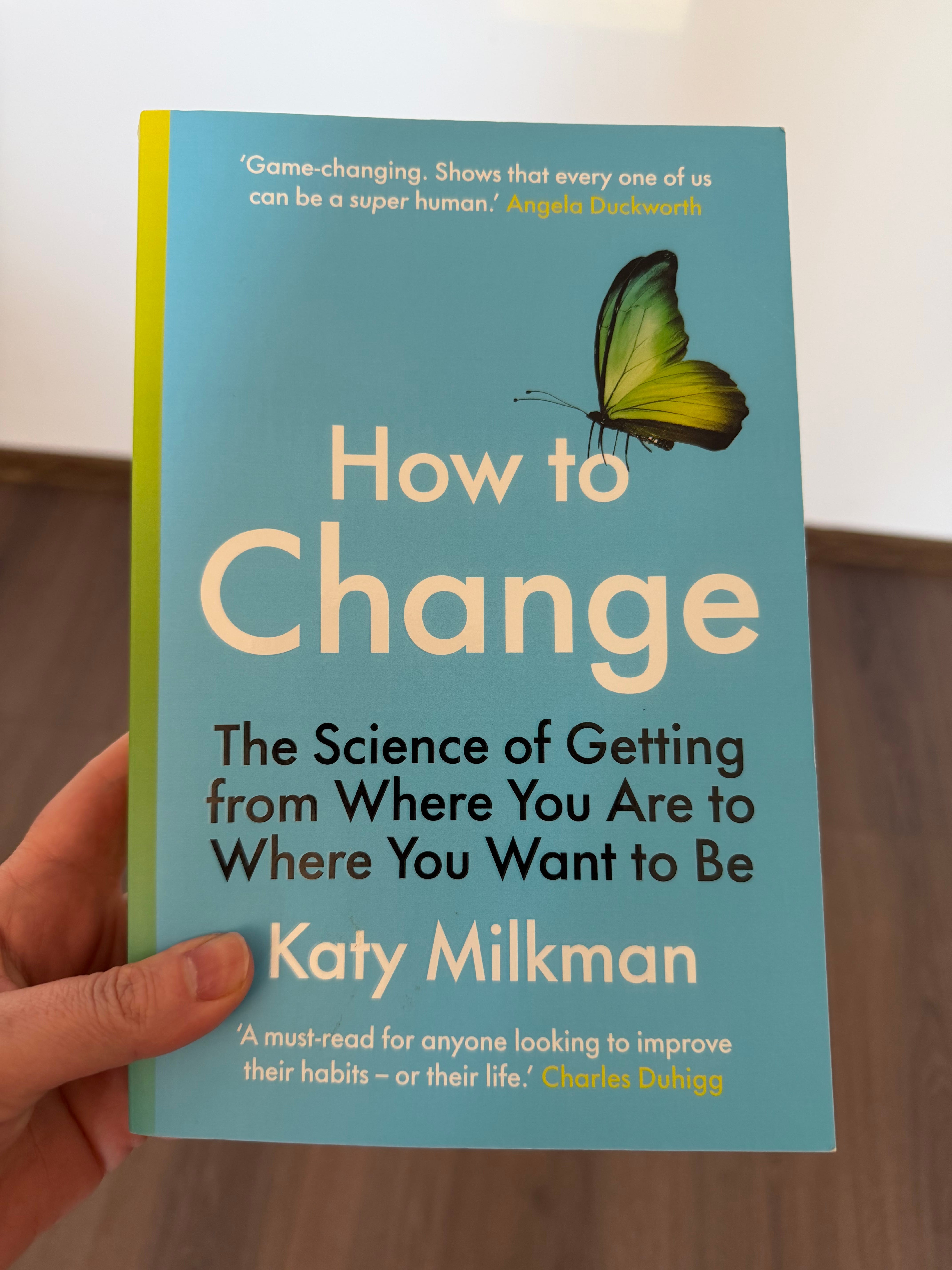
This time I’m sharing How to Change: The Science of Getting from Where You Are to Where You Want to Be by Katy Milkman. And I’ll be honest with you — I wasn’t sure what to expect when I picked it up. Books about self-improvement can feel preachy or full of advice that sounds good in theory but falls apart in real life.
This one is different. Milkman is a behavioral scientist and professor at the Wharton School at the University of Pennsylvania, and she has spent her career studying not what people should do, but why they don’t — and what actually works to close that gap. The result is one of the most practical and genuinely useful books I’ve read in years.
If you’ve ever set a goal you didn’t reach, started a habit you couldn’t keep, or wanted to make a change and couldn’t quite get started — this book is for you. Which means it’s for almost all of us.
The Central Idea: Change Isn’t About Willpower
Milkman opens by dismantling one of the most persistent myths about behavior change: that failure comes from weak character or lack of willpower.
It doesn’t. The research is clear on this.
Most of us fail to change not because we don’t want to badly enough, but because we’re up against specific, identifiable psychological obstacles — obstacles that researchers have studied and, more importantly, found ways around. The key insight of the book is this: if you can diagnose the right obstacle, you can apply the right solution. Not a generic solution. The right one for your specific situation.
That’s what makes this book different from most advice you’ll hear. It’s not one-size-fits-all. It’s a toolkit. And Milkman walks you through each tool carefully, with the research to back it up.
The Fresh Start Effect
The book opens with one of Milkman’s own most celebrated findings: the fresh start effect — and if you’ve been reading Healthy Seniors for a while, this one will feel familiar.
Back in January, I wrote a full piece on the Fresh Start Effect — specifically about why January feels so different and how to harness that energy without crashing by February. Milkman’s research is the science behind that piece, and reading her book gave me an even deeper appreciation for why this phenomenon is so powerful.
The short version: people are measurably more motivated at “temporal landmarks” — the start of a new year, a new month, a birthday, a Monday, even the day after a holiday. These moments create a mental separation between our past self and our present self. They give us permission to draw a line and say: that was then, this is now.
What I love about this is how actionable it is. You don’t have to wait for January. Any meaningful date can serve as a fresh start. Just had a birthday? That’s your starting line. Doctor gave you a new diagnosis or updated your medication? That appointment can be the moment you decide things are different now. Coming back from a visit with grandchildren feeling inspired to take better care of yourself? Use that feeling — it’s a real psychological opening, not just a mood.
And here’s something worth remembering: Dr. Gladys McGarey, the surgeon who lived to 103, had a ten-year plan at 102. If she could claim a fresh start at that age, none of us has an excuse not to. It’s never too late to draw the line and begin.
If you haven’t read the January piece yet, it pairs beautifully with this book. Together they give you both the science and the practical framework for putting fresh starts to work in your own life.
Present Bias: Why We Steal From Our Future Selves
One of the most important concepts in the book is present bias — our universal tendency to overvalue immediate rewards and undervalue future ones.
It explains almost everything. Why we skip the morning walk when the bed is warm. Why we put off scheduling that colonoscopy or eye exam. Why we know we should call the friend we’ve been meaning to check on, and somehow another week passes. The future benefit feels abstract and distant. The immediate comfort feels real and close.
Milkman uses a vivid phrase for this: we are “stealing from our future selves.” Every time we choose the comfortable now over the beneficial later, we’re borrowing happiness from tomorrow’s version of us — who will be left holding the consequences.
This isn’t a character flaw. It’s a feature of how human brains are wired. But knowing it exists means we can design around it.
Temptation Bundling: Making Good Things Enjoyable
One of Milkman’s most practical strategies for fighting present bias is what she calls temptation bundling — the practice of pairing something you should do with something you genuinely want to do, so that the two become linked.
Her own example: she only let herself listen to her favorite audiobooks while exercising. The result? She started looking forward to the gym.
For our community, the possibilities are rich. Only allow yourself to watch your favorite morning program while doing your physical therapy stretches. Save a beloved podcast — a true crime series, a history show, whatever you love — strictly for your daily walk. Let yourself call a friend or family member only while you’re also folding laundry or preparing a healthy meal. Treat yourself to a special tea, but only while doing your crossword or brain-training exercises.
The strategy works because it stops asking you to be disciplined and starts making the healthy choice the enjoyable one. You’re not grinding through something unpleasant. You’re protecting access to something you love.
Commitment Devices: Binding Your Future Self
Another powerful tool Milkman covers is the commitment device — a way of pre-committing to a future behavior so that your present self can’t talk your future self out of it.
The classic example is Ulysses, who had himself tied to the mast of his ship so he could hear the Sirens without being lured overboard. He knew his future self would be tempted. So his present self made the temptation irrelevant.
Modern commitment devices are simpler, but the logic is the same. Schedule all your medical appointments for the year in January, before the year fills up and inertia sets in. Sign up and pay in advance for a gentle yoga or water aerobics class — because now skipping has a real cost. Tell your daughter you’re going to walk every morning this week, knowing she’ll ask about it on Sunday. Set your pill organizer on top of your coffee maker so you literally cannot make your morning coffee without seeing it.
For those who live alone — and many of you do — social commitment devices are especially valuable. Telling someone your plan, inviting them to check in, arranging to do something with a neighbor rather than alone. It doesn’t just improve follow-through. It creates the kind of connection we all need more of. If loneliness is something you’ve been thinking about, my piece on The Lonely Century speaks directly to this — and to just how much is at stake when we let those connections slip.
The Ostrich Problem: Why We Avoid Uncomfortable Feedback
Milkman devotes a chapter to what she calls the ostrich problem — our tendency, like the proverbial ostrich with its head in the sand, to avoid information that might be discouraging.
We don’t step on the scale after the holidays. We postpone the appointment because we’re afraid of what they might find. We notice a symptom and decide to wait and see. We avoid asking the doctor to explain our test results in plain language because we’re not sure we want to understand them.
The problem is that avoidance doesn’t make the underlying issue go away. It just ensures we can’t address it. And often, the thing we’re dreading is less frightening than the anxiety of not knowing.
For health in our later years, this chapter should be required reading. Early detection saves lives — for cancer, heart disease, diabetes, cognitive decline, and much more. The screening you’ve been postponing, the conversation with your doctor you’ve been avoiding, the honest look at your balance and fall risk — these aren’t things to fear. They’re opportunities to get ahead of something before it gets ahead of you. Milkman’s research is clear: people who create regular, gentle feedback loops — consistent check-ins, honest tracking, trusted people who tell them the truth — do significantly better over time.
Procrastination: The Present Bias in Action
Closely related to present bias is procrastination, which Milkman treats as its natural offspring. We delay not because we don’t care, but because the cost of starting feels immediate and the reward of finishing feels far away.
One of the most interesting findings she shares is about the middle problem. We tend to start things with motivation and finish things with a burst of energy. But the long middle stretch is where most efforts die.
Think about the person who joins a senior fitness class with great energy in January, stays consistent for three weeks, then quietly stops showing up by February. Nothing bad happened. Life just got in the way during the middle, when the novelty had faded and the results weren’t yet visible enough to feel rewarding.
Milkman’s research shows that creating artificial midpoints — mini-milestones, small celebrations of progress, visible markers of how far you’ve come — can rescue motivation during that slump. Mark an X on the calendar every day you take your walk. Keep a simple log of the days you’ve stuck to a new eating habit. Celebrate the one-month mark of a new routine, not just the end result. Something as small as a paper chain can keep momentum alive when the initial excitement fades. It sounds almost too simple. But the research says it works.
Laziness and the Power of Defaults
One of the most eye-opening chapters in the book is about laziness — not as a character flaw, but as a fundamental feature of human behavior. We gravitate toward the path of least resistance. Always. And this tendency is far more powerful than most of us realize.
This is something I explored in depth in my piece on The Power of Autopilot — the idea that up to 88% of our daily behaviors run on automatic, and that the smartest thing we can do is design those automatic behaviors to work for us rather than against us. Milkman’s research on defaults is the scientific backbone of exactly that idea.
Her insight is simple but profound: if you want to change your behavior, change your defaults. Don’t rely on making the right choice in the moment. Make the right choice the effortless one.
For seniors, this translates directly. Keep your walking shoes by the front door, not in the closet. Put your medications in a weekly pill organizer on the kitchen counter rather than in a cabinet you have to open deliberately. Stock the refrigerator with cut fruit and easy healthy snacks at eye level, so they’re what you reach for first. Keep a water glass next to your reading chair so staying hydrated doesn’t require a separate trip. Put a resistance band or light weights next to the TV chair so a few minutes of gentle exercise during commercials becomes the natural thing to do.
Set up automatic prescription refills so you never run out. Schedule your annual wellness visit, flu shot, and specialist follow-ups all at once in January rather than waiting until you feel like it. Arrange for healthy groceries to be delivered so that convenience works in your favor instead of against you.
None of these require willpower. They require one moment of deliberate design — and then behavior follows almost automatically. If you want to go deeper on this idea, the Autopilot piece walks through exactly how to audit and redesign your daily defaults.
Confidence: When Too Much Becomes a Problem
Milkman addresses something that surprised me: overconfidence as a barrier to change. Not lack of confidence — too much of it.
Most of us overestimate our ability to follow through on good intentions. We think we’ll remember to take the new medication without setting a reminder. We think we’ll get around to calling the friend we’ve been meaning to check on — this week, for sure. We think we’ll manage the diet change on willpower alone, without clearing the pantry or telling anyone about the goal.
Milkman encourages what she calls strategic pessimism about our future selves: assume you’ll be tired, distracted, and tempted. Plan for that version of yourself, not the motivated one you feel like right now.
This is especially worth hearing for those of us managing complex medication schedules, multiple health conditions, or the natural cognitive changes that come with aging. Setting a phone alarm for medications isn’t admitting defeat — it’s smart design. Asking your doctor to write things down isn’t a sign of weakness — it’s accounting for the reality that we’re all more forgetful under stress or fatigue. Building in the reminders, the prompts, the structures isn’t giving up on yourself. It’s setting yourself up to succeed.
Social Norms: We Are Who We’re Around
One of the most powerful forces shaping our behavior is one we rarely examine: the behavior of the people around us.
Milkman reviews decades of research showing that we unconsciously calibrate our behavior to match what we perceive as normal in our community. If the people around us exercise, we exercise more. If they eat well, we eat better. If staying socially active is the norm in our circle, we stay more connected ourselves.
This finding sits right alongside what Noreena Hertz argues in The Lonely Century — that community isn’t just pleasant, it’s medicine. And what Dr. Gladys McGarey embodied throughout her 103 years: that staying engaged with others, with purpose, with life, is itself a health intervention. These books are all pointing at the same truth from different directions.
Think about the difference between a social group that gathers for weekly walks versus one that gathers mainly to watch TV. Both are connection. But one subtly shapes your activity levels in a way the other doesn’t. A friend group that talks openly about going to the doctor, getting screenings, and managing health conditions normalizes those behaviors — making it easier for everyone to do them.
This is one more argument for being intentional about community. The people we spend time with don’t just make us happier. They shape who we become — our habits, our health behaviors, our sense of what’s normal and possible. If you want to exercise more, find people who exercise. If you want to eat better, cook with someone who cooks well. If you want to stay mentally sharp, spend time with people who read, learn, and stay curious.
Putting It All Together
In her final chapters, Milkman brings the whole framework together with a simple but important message: there is no single solution to behavior change. The right strategy depends on the right obstacle.
Struggling to start exercising? Use a fresh start moment — a birthday, a new season, the Monday after a doctor’s visit. Finding the healthy option boring? Try temptation bundling with a favorite podcast or show. Slipping back into old patterns? Build a commitment device — prepay a class, tell a friend, set up an accountability check-in. Avoiding the doctor? Address the ostrich problem head-on and schedule that appointment today. Losing steam in the middle of a new habit? Create milestones and mark your progress visibly. Relying too much on remembering and willpower? Change your environment and defaults instead.
This is a fundamentally respectful approach. It assumes you’re not lazy or weak or failing. It assumes you’re a human being up against predictable human obstacles — and that with the right strategy, change is genuinely within reach.
Why This Book Matters for Healthy Seniors
Reading How to Change as someone writing about aging well, I kept thinking about how perfectly it speaks to the specific challenges we face.
Many of us want to exercise more, eat better, stay socially connected, manage chronic conditions, see our doctors regularly, learn new things, and stay engaged with life. We don’t lack the desire. We often lack the right strategy — or we’ve been using the wrong one and blaming ourselves for it.
What I find so powerful about reading this book alongside everything else we’ve explored in this series — Dr. McGarey’s wisdom about purpose and movement, Hertz’s research on the health cost of loneliness, Holmes’s findings on the happiness return of time spent with others — is that they all reinforce each other. Connection matters. Purpose matters. How you spend your days matters. And now Milkman hands us the practical science for actually making the changes we already know we want to make.
Milkman’s book gives us a better way. Not in a condescending way, and not with the exhausting energy of someone telling you to just try harder. In a warm, evidence-based, human way that acknowledges how hard change is — and then hands you real tools to make it easier.
I found myself putting the book down several times to think about my own habits. Which defaults in my life could be redesigned. Which commitments I could make now, to the benefit of my future self. Where I’d been relying on willpower when I should have been redesigning my environment.
I think you’ll do the same.
Your Turn
After you read How to Change, I’d encourage you to try just one thing: pick one behavior you’ve been wanting to change and ask yourself honestly — what’s the actual obstacle? Is it that starting feels hard? Is the healthy option less enjoyable than the alternative? Are you avoiding information you don’t want to face? That you keep forgetting and then beating yourself up about it?
Name the obstacle. Then find the matching tool.
Start small. Start specific. And if you can, start on a day that feels like a fresh beginning.
As always, I’d love to hear what you’re reading. What books on health, connection, meaning, or living well have stayed with you? Leave a comment or write back — I read everything.


Thank you so much for this book referral! I’ve just downloaded it now from my local library. I learn so much from your columns and it’s always enjoyable and educational. Many thanks again !
This sounds fantastic! I immediately went and put it on hold at the library! Can't wait to read it